Showing posts with label Coming of Age. Show all posts

Monday, 17 April 2023

WHERE THE CRAWDADS SING by Delia Owens

4 out of 5 stars


On Amazon (universal link)
On Goodreads


How I discovered this book: Many book blogs!

In a Nutshell: Girl grows up alone in the marshland of North Carolina, in the 1950s and 60s.

I'm several years late to the party with this novel, but it finally got plucked from my TBR list (Amazon tells me I actually bought it three years ago!).  For anyone who hasn't read it, it's about a girl called Kya who grows up alone in the marshland of North Carolina, in the 1950s and 1960s.  When she is six her mother leaves, soon to be followed by her brothers and sisters and finally her drunken, abusive father.  The story is about how she survives and how these years affect the events of her early adulthood; it paints a vivid picture of life in this forgotten backwater in the mid 20th Century, and shows how the changing attitudes of elsewhere in the country had yet to touch it.  Kya's love of and connection with the marshland shines through; she is part of it.
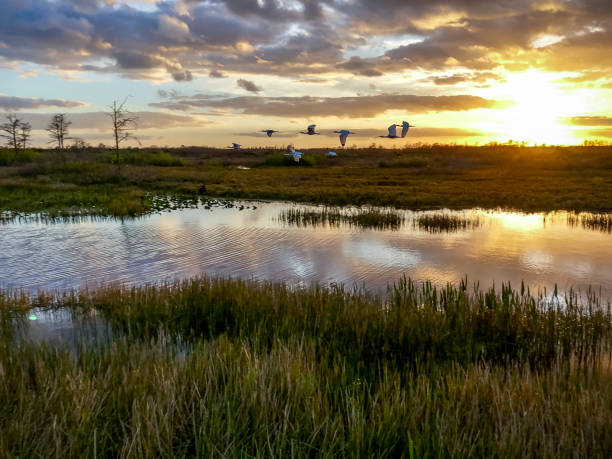

Running through her story are chapters from 1969, when a body is discovered.  Was Chase Andrews murdered?  If so, by whom?  Eventually, the two timelines meet up.

This is not a book to be read from today's viewpoint; the world was much larger in those days and it was easy for people to simply disappear, to evade authority, to lose touch with someone completely.  Neither should Kya's survival be judged by the way in which today's children behave; she was taught how to live off the land from a young age, to do basic chores and be resilient.  Then there is the fact that she was left alone with her abusive father by the brother who supposedly loved her; I don't think one can ever say that a character would or wouldn't behave a certain way.  Human beings do all sorts of inexplicable stuff.


There were a couple of aspects that seemed a little far-fetched (such as her learning to read in about two days, the ease with which her shack on the marshes was connected to mains water and electricity supplies), and there were some loose ends that I expected to be tied up, but on the whole I enjoyed the book very much.  It's one of those that depends on how much you are willing to suspend your disbelief, I think. 


Saturday, 7 May 2022

FORTUNATE SON by Thomas Tibor #RBRT #TuesdayBookBlog

4 out of 5 stars


On Amazon
On Goodreads


How I discovered this book: it was submitted to Rosie's Book Review Team, of which I am a member.

In a Nutshell: Coming of age story set in 1970, on a college campus in southern Florida.

Reed Lawson has a lot on his plate - he's juggling college and membership of the Reserve Officers Training Corps (ROTC), and his much revered father has been MIA in Vietnam for three years.  Then there are the droves of anti-war demonstrating hippies on campus, calling people like himself and his father 'warmongers'.

When circumstances lead him to volunteer at a community project giving help to people with drug and emotional problems, he falls for Jordan, a strident feminist and peacenik.  His life also becomes entangled with a younger girl with serious emotional and family problems.

I enjoyed reading this; the storytelling itself is fine, the characters are clear and three-dimensional, and the author certainly knows how to write convincing, appropriate dialogue, a talent I believe is innate - I didn't wince once, which says to me that the knack probably comes naturally to him.  Reed's conflicting emotions about his father, and his reaction to discoveries about his parents, were extremely well written.  Also, there were a few excellent passages about the time and feel of the era:

'The interstate had opened a few years ago.  Motels, fast food joints and gas stations mushroomed at each exit, sprouting garish oases in the rural countryside.  His mother hated the trend, predicting the country's regional charms would be bulldozed in a few decades to make way for chain stories and restaurants that peddled the same brand of blandness in every state.'

'He felt a kinship with all who'd travelled before him on thousands of miles of highway, which had replaced dirt roads, which covered trails hacked from raw wilderness.  Generations of restless Americans, forever on the move.  Pushing west, pushing south, yearning to go anywhere that promised to be better than where they came from.'

Although it's a good book and I liked it, I thought it could have been cut down by about ten per cent to make it tighter; it's quite long, and a fairly slow unfolding.  Also, the reminder of the era's culture was a little over the top - the frequent indication of what song was playing on the radio or floating out of a student's window, the way everyone's conversation revolved around drugs, Vietnam, feminism and their own existential crisis, constantly.  It became a little repetitive after a while.

Having said that, I would most definitely recommend it as a solid human interest novel and a good story, particularly if you remember or have an interest in the era.


Thursday, 12 November 2020

THE BOY AND THE LAKE by Adam Pelzman #RBRT

4.5 out of 5 stars

On Amazon UK

On Amazon.com

On Goodreads and BookBub


How I discovered this book: it was submitted to Rosie's Book Review Team, of which I am a member. 

In A Nutshell: Literary coming-of-age novel set in 1960s New Jersey, with a low-key mystery.

From the blurb, I thought this book would be dark and plot-driven; it mentions protagonist Ben's suspicions about a body found floating in the lake, thus: As Ben’s suspicions mount, he’s forced to confront the terrifying possibility that his close-knit community is not what it seems to be—that, beneath a façade of prosperity and contentment, darker forces may be at work. I expected all sorts of sinister revelations, but the Ben's questions surrounding the death of Helen Lowenthal form the background rather than the main story—though when his answer arrives, it is shocking indeed.  I love a good twist within a twist that I didn't even half-guess, and this certainly ticked that box.

Essentially, this is a coming-of-age novel.  Although I think it could have done with a little more plot, the writing itself is spectacularly good, of much literary merit, making it a joy to read.  The subtleties of the characters, traditions and social protocols of the Jewish community in the 1960s were acutely observed, as were the marital problems of Ben's parents, his mother's neuroses, and his own burgeoning drink problem.  Later, the lake by which the community lives is contaminated, which I took to be allegorical of not only the underlying problems within the society that was Red Meadow, but the 1960s themselves—the corruption and unrest beneath the image of hope, prosperity, revolution and the Summer of Love.  Or perhaps I'm reading too much into it.

It's one of those books that I didn't absolutely love because of personal preference about genre, but I can appreciate is first class of its type.  Should complex family intrigue, stunningly good writing, coming-of-age dramas and the strange new world of the 1960s be totally your thing, I would recommend that you buy and start reading this immediately.  And the ending is perfect.


Friday, 22 March 2019

THE WIRE RECORDER by Thomas A Levitt #RBRT

4 out of 5 stars

On Amazon UK
On Amazon.com
On Goodreads


How I discovered this book: it was submitted to Rosie's Book Review Team, of which I am a member.

In a Nutshell: character drama spanning several decades, dealing with sociopolitical issues of mid-twentieth century America.


I was attracted to this book because of the great title, the great cover, and the blurb that spoke of the 1951 campaign to root out communists in the US film industry, something that interests me greatly.  Mr Levitt writes well, and the book flowed along nicely.  I did like much of it, hence the 4 stars, although it was not the book I expected.

The anti-communist witch-hunt is dealt with in a brief fashion in the first ten per cent, after which the novel is about the life of Sophie Hearn, the daughter of Larry, who suffered under the HUAC (House Un-American Activities Committee) campaign.  Running alongside Sophie's story is that of Steve, whose parents were also involved; I found his early development one of the most compelling parts of the book, especially as it took place in a time when developmental disorders went unrecognised.

Mr Levitt creates the atmosphere of 1960s California so well, I would imagine from personal experience, and many of the incidental characters come alive immediately, particularly in their dialogue.

The reason I didn't enjoy the book quite as much as I had hoped is that there was not much actual plot; it is more of a biographical account of Sophie's life, with chapters dedicated to the social issues of the time.  Throughout, I kept waiting for some real conflict, or suspense; opportunities for drama were missed, with any problems (one character's excessive use of marijuana, and, later, the logistics of a mixed race marriage) being resolved quickly and easily, within a page or two, almost as if the author had a checklist of issues to be mentioned.

I enjoyed reading Steve and Sophie's experience at their student parties (and the ridiculous dialogue of the hippie idealists was extremely well done), but few of the scenarios tied together, events happening in isolation.  I wonder if there was perhaps too much material for one book; the author has dealt with not only the HUAC campaign, but also the newly permissive 1960s, sexism, drugs, the women's lib movement, living in a commune, new teaching methods, racism, the difficulties of mixed race marriages, employment problems—all this is crammed into one medium-length novel, whereas any one of those subjects would make a great basis for a story all on its own.  This is a debut novel, and I know it can be a temptation to play all your cards straight away!

The bulk of the book is about Sophie running an experimental school, and her subsequent difficulties in finding a post in a 'public' school.  Sadly, I never got a sense of who Sophie was, though Steve was a rounded, three-dimensional character.

What kept me turning the pages was the writing style, which is extremely readable, the entertaining snapshots of particular aspects of the era, the fact that the author clearly knew his subject matter so well, and the excellent dialogue in the portraits of incidental characters.  In the last fifteen per cent, too, there is more of a coming together of Sophie and Steve's lives, a little more suspense, and an explanation of why and how they were affected by what happened to their parents at the beginning of the book.

To sum up: as a fictional account of the sociological history of the era, this is a most fascinating book; for those who are looking for a plot-driven novel about the HUAC campaign and its affects, though, not so much.


Sunday, 8 July 2018

LUCKY STAR by Holly Curtis

3 out of 5 stars

On Amazon UK
On Amazon.com
On Goodreads


How I discovered this book: it was submitted to Rosie's Book Review Team, of which I am a member.

Genre: 1980s nostalgia, coming of age

Set in 1984, this story opens with a group of schoolboys who go on a shoplifting trip to Guernsey, keen to get their hands on designer sports gear they crave.  Protagonist Ben is particularly desperate for a certain pair of trainers.  This is intermingled with him seeing the gorgeous Susie and falling instantly in love with her, all set to a backdrop of Madonna's Lucky Star.

What I liked:
1. It's nicely written, and flows well; it's an easy read.  The characterisation is very good, I thought, and the dialogue is, for the most part, realistic; natural.  I liked the usage of regional slang words like 'dinlo' and 'clump' (and the fact that the author didn't feel the need to explain them!).
2. There are elements that are very typical of kids of that age, and it's good to read about a time when young people didn't have their eyes permanently fixed on smartphone screens.  It certainly ticked a few nostalgia boxes.

What I was less sure about:
1. The basic premise.  I realise the kids who flogged the designer gear would have had money, but where did Ben and his friends get the cash to travel to Guernsey, get taxis, eat in cafés, buy beer, etc?  There was no indication of him asking his aunt for it.  I also don't buy that a group of daft 16 year olds suddenly became proficient at shoplifting from upmarket shops, where assistants know all the tricks.  I think it's a fun idea that needed a bit more thinking through.
2. I found the whole Susie-love-at-first-sight thing a little hackneyed, more like something you would see in a 1980s film, but the 'coming of age' genre has grown more sophisticated since then; also I felt the whole novel needed chopping down a bit.

So not really for me, but the fact that it's nicely written and the characterisation is good, and it has the nostalgia thing going on means it may appeal to those who like a light read about a time they remember, and enjoyed films like Ferris Bueller's Day Off. 

Monday, 10 July 2017

WHISPERS IN THE ALDERS by H A Callum @HA_Callum #RBRT #TuesdayBookBlog

4.5 out of 5 stars

On Amazon UK
On Amazon.com
On Goodreads


How I discovered this book:  It was submitted to Rosie Amber's Book Review Team, of which I am a member.  Interestingly, I didn't initially choose it as the genre and blurb didn't particularly appeal, but then I got talking to the author on Twitter (about something else entirely) and he asked me if I would take a review copy.  I'm glad I did.

Lesson for readers: don't bypass books just because they don't immediately appeal; you never know what gems you might find behind that quiet cover.
Lesson for writers: talk to people on social media!

Whispers in the Alders is set in the small east US town of Alder Ferry, where young teenagers Aubrey (female) and Tommy both suffer loveless, cold childhoods. Aubrey's family are wealthy, whereas Tommy's are poorer, and his life is quite brutal.  They meet in a wooded area behind Aubrey's family home, amongst the alders, a place that both of them feel is their only home.  This is described by the author as an 'alder stand', not a term with which I am familiar, so I looked up some pictures on DuckDuckGo images to make sure it was as I imagined it!


The book starts in the present, with Aubrey in Portland, Maine, as an adult; she has left her family and the prejudices of the small town long behind.  It then goes back to her early teens, and the loneliness she feels.  The books spans the period of this time until early adulthood, and follows the tragedies of her and Tommy's lives.

I'd class this book as literary fiction, as well as a contemporary 'coming of age' story.  Much of the writing is beautiful; I read that Mr Callum is a poet, too, and this is evident, but it's not wordy for the sake of it.  It's quite a dense sort of novel, with much description, and on occasion I felt it could have been trimmed down just a little, but that's just personal preference, and I certainly appreciated every line.  The plot itself develops slowly, with some shocking outcomes (child abuse and homophobia, but nothing graphic), and it's perfectly plotted.  It's a heartrending, lonely sort of book; I longed for Aubrey and Tommy to find happiness.

A hidden gem by an extremely talented writer, very American (which I liked), and one I definitely recommend ~ I hope some other members of Rosie's team pick it up, or that anyone who reads this takes the plunge and clicks 'buy'!


Saturday, 26 November 2016

LOST IN STATIC by Christina Phillipou

4 out of 5 stars

On Amazon UK HERE
On Amazon.com HERE
On Goodreads HERE


This is the debut novel by book blogger Christina Phillipou, a well plotted mystery about four kids in their first year of university.  She should be proud of herself.

The basics
The story is set in 2001, and told from the first person points of view of Juliette, Ruby, Callum and Yasmine, in frequently alternating short sections.  Juliette is a Christian, a sort of observer, I thought, with hang ups about her sexuality. Ruby is Miss Insecure, accident prone, a bit silly, the stereotypical hard partying eighteen year old.  Yasmine is a spoilt (apparently) rich girl, superficial and calculating, intelligent and cold.  Callum is a friendly guy, handsome, and, most interestingly, his sections are written in the form of emails to an unknown recipient - this is really good, as the 'who is he writing to?' questions builds throughout!  From the beginning we get the hint of dark events to come, and behind the scenes; there is some mystery behind each character, with some secrets nicely hinted at. 

The postive
At first I was only averagely interested in the story itself, but it crept up on me and by about 40% I was engrossed.  The build up is excellent, and, more than that, I applaud Ms Phillipou for her skill in making sure all the characters had such different 'voices'.  As far as this element goes, this novel is one of the best I've read in ages.  Callum is totally different from how he is seen by Yasmine and Ruby ~ not so sure of himself as they assume.  I liked reading Yasmine's sections because she is clever, insightful and articulate; she's the bitch of the show, and by far the most interesting.  I can't say I warmed to any of them, but I like this in a novel, and applaud a writer who has the confidence to make her characters less than appealing.  'Nice' is boring; I like to read about the self-obsessed, the delusional, the underhand!

I thought it was a good, no holds barred portrayal of young men and women of that age, and the writing just flows, so easy to read.

The negatives
Few, and not game-changingThe removal of about 95% of Ruby's constant use of the word 'mate' would have made her less irritating.  I thought it could have done with a bit of tightening up by the editor, generally, and there are some minor punctuation errors (and note to proofreader: the thing you pin on your clothes is a brooch, not a broach!)

The second point is something that many will not agree with, and an observation rather than a criticism.  As most scenarios are seen through the eyes of all the main characters, the reader keeps being taken back to the beginning of a scene to re-live it.  It's fascinating to see how differently each one sees a set of circumstances (I particularly liked the way in which one girl thinks she is getting somewhere with Callum, but in his sections she is mentioned only in passing and, later, as if he thinks she's a bit of a stalker), but on occasion I found it made the flow of the book stilted.  There are ways of showing that Yasmine might view things differently from Ruby without playing out the stream of events in its entirety; a couple of neat paragraphs with the key points, for instance, might have added variation, paced the book better and actually had more impact.

Lastly, I wasn't convinced by this constant demonising of smokers and a big deal being made out of it generally.  Before the public smoking ban of 2007, people either smoked or they didn't, to whatever extent, and that was that, particularly in young, hard drinking, hard partying circles; it wasn't the issue that it is now.

On the whole, I was most impressed with this debut.  It's so good to see such an original book by an author who has genuine talent for dialogue, character portrayal and the build up of suspense; the mystery unravels with perfect timing.  I would also like to thank Christina Phillipou for adding another word to my 'words I can't type' list.  The book's called Lost In Statci, right?  Every time...!