Sunday, 20 October 2019

Little Known Gems Part #2: Historical Fiction

Why do some books do well on Amazon and some don't?

After 8 years of being involved in the self-pub world, I've come to the conclusion that Amazon sales can (but not always) have little to do with the book's quality, exposure on social media, the cover, the blurb, the genre, whatever.  It might be simply that it never got enough initial, regular sales and reviews to click the Amazon algorithms into 'start recommending and making generally visible to readers' mode.   

And if your book doesn't hit that wave, it can become all but invisible on the site where most people buy their ebooks.  The less it sells, the less it will continue to sell.  If Amazon was a physical library, it would be tucked away on the bottom of a dusty shelf at the back.


I decided to start a short (and probably irregular) series of recommendations for books that really ought to sell brilliantly, because they're exceptionally good.  

This isn't just me giving a shout-out for some writer friends, or saying, 'this is alright, you might like it'.  I'm saying this: 

If this is your genre, you'll love it, 
because it's seriously good

I've chosen books that an Amazon robot has either misfiled on a back shelf or left in the stockroom by mistake—today, though, they're where they should be: on one of those cool little display things at the front, near the counters :)


#2: Historical Fiction
Click the book's title for my review, and Amazon buy links


The Tudor Enigma Trilogy  by April Taylor
16th century - Alternative History 


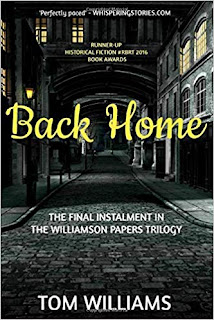
Back Home by Tom Williams
Victorian London - Crime


The Planter's Daughter by Jo Carroll
19th Century - Ireland - Australia - New Zealand


Long Shadows by Thorne Moore
11th, 14th and early 20th Century - Wales 


The Worst Journey in the World by John R McKay
WW2 Naval - Liverpool - Russia


New York 1609 by Harald Johnson
17th Century - New York


Monday, 14 October 2019

THIS WILL BREAK EVERY BONE IN YOUR HEART by Keith Anthony Baird @kabauthor

4 out of 5 stars

On Amazon UK
On Amazon.com
On Goodreads


How I discovered this book: Twitter

In a Nutshell: Long novelette/short novella, dark psychological fiction/horror: mind control.

This is a clever, short book about a boy called Zachary who is placed in an institute at a very early age, where he has contact with no humans apart from his carers for some years.  He is found 'parents' at around the age of 5, and from then on every aspect of his life is monitored and controlled by a shadow organisation.  His family, friends, the ups and mostly downs throughout his life—none of it happens by accident.  His formative years are damaging enough, but as the tragedies and losses pile up, he becomes increasingly paranoid and sociopathic.

The story is very well written, and a real page turner; I couldn't work out why any of it was happening or what the outcome was going to be.  In the last third of the book there is a massive twist, completely unexpected—and the purpose of the whole 'experiment' is revealed at last.  I'm usually pretty good at predicting stuff like this, but I didn't guess it.

It's a dark and distressing story, not for the faint of heart, but for anyone who likes low-key, psychological horror, and has an interest in behind the scenes mind control (that's me with both hands up), I'd most certainly recommend it.

Sunday, 13 October 2019

Little Known Gems: Part #1: Post Apocalyptic/Dystopian/SciFi/Military


Why do some books do well on Amazon and some don't?

After 8 years of being involved in the self-pub world, I've come to the conclusion that Amazon sales can (but not always) have little to do with the book's quality, exposure on social media, the cover, the blurb, the genre, whatever.  It might be simply that it never got enough initial, regular sales and reviews to click the Amazon algorithms into 'start recommending and making generally visible to readers' mode.   

And if your book doesn't hit that wave, it can become all but invisible on the site where most people buy their ebooks.  The less it sells, the less it will continue to sell.  If Amazon was a physical library, it would be tucked away on the bottom of a dusty shelf at the back.


I decided to start a short (and probably irregular) series of recommendations for books that really ought to sell brilliantly, because they're exceptionally good.  

This isn't just me giving a shout-out for some writer friends, or saying, 'this is quite good, you might like it'.  I'm saying this: 

If this is your genre, you'll love it, 
because it's seriously terrific

I've chosen books that an Amazon robot must have mis-filed on that dusty back shelf, or left in the stockroom by mistake—today, though, they're where they should be: on one of those cool little display things at the front, near the counters :)


Click the book's title for my review, and Amazon buy links


The Last Feast by Zeb Haradon (novella)
SciFi - Post Apocalyptic - Space


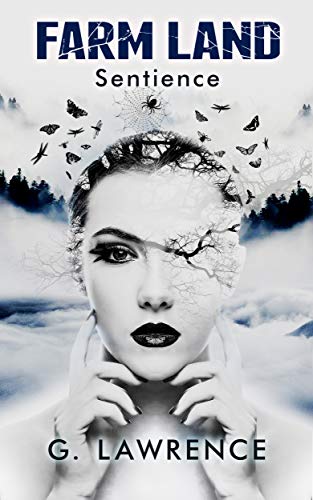
Farm Land: Sentience by G Lawrence
Dystopian - SciFi - Horror


The Bledbrooke Works by John F Leonard
Horror


The Morning Star by C W Hawes
Post Apocalyptic 


Jonah by Carl Rackman 
Military - Paranormal - Thriller


October Rain by Dylan Morgan (novella)
SciFi - Post Apocalyptic - Dystopian


Future Perfect by Katrina Mountfort
Sci-Fi - Dystopian - Post apocalyptic


By The Feet Of Men by Grant Price
Dystopian - Post Apocalyptic - Climate Change


The Turning of the World by John Privilege
Post Apocalyptic 


X by Jack Croxall (short story)
Post Apocalyptic


Next time: Historical Fiction


Friday, 11 October 2019

THE CONFESSOR'S WIFE by Kelly Evans #RBRT

4 out of 5 stars

On Amazon UK
On Amazon.com
On Goodreads


How I discovered this book: it was submitted to Rosie's Book Review Team, of which I am a member.

In a Nutshell: 11th century historical fiction

As more and more historical novels hit the virtual shelves, authors of the genre are digging deeper to find the lesser known characters to write about.  Edith was, as the title suggests, the wife of Edward the Confessor, one of the last Anglo-Saxon kings of England.  Edward was succeeded by Harold Godwinson, who was famously defeated by William of Normandy in 1066.

I enjoyed this - it's a light sort of historical fiction that flows well, an 'easy read'.  I don't know much about the factual details of this time, but I did have a brief look online and it appears to be well-researched.  Also, the domestic details are presented well, with just enough information—I liked that there was none of the endless descriptive passages straight from the research notes that is present in some histfic; I never felt that I was reading the author's research at all, which is always a plus.

On the slight downside there were times when I felt the dialogue was too modern, with the odd mild Americanism such as 'snuck' instead of 'sneaked', though they weren't bad enough to make me stop reading.  My only other negative was problems with punctuation; either the author or her proofreader, or preferably both, need to learn about run-on sentences/comma splices; there were quite a lot of these, and the odd missing comma.  But, again, this was only mildly irritating.

This isn't a book for the historical fiction purist or buff, but for those who are after an enjoyable, light novel with some well-drawn characters and an interesting look back in time, I'd say it's just the thing.

Wednesday, 2 October 2019

TRIBE OF DAUGHTERS by Kate L Mary @kmary0622

4.5 out of 5 stars

On Amazon UK
On Amazon.com
On Goodreads
On BookBub


How I discovered this book: in my Kindle library; I've read lots of this author's books before, and downloaded this some time ago.

In a Nutshell: In a post-apocalyptic world, a village exists up a mountain which is ruled by women

The novel is set 70 years after a plague wiped out most of the population, and takes place in a strange village up a mountainside - a matriarchal society, in which the men do as they're told, and women choose husbands to make more daughters from the 'yieldlings' within the village (men who have grown up there), or 'foundlings' - men from outside, who are kidnapped.

The story starts when Jameson is abducted along with 4 other members of a working party.  He is chosen as a husband by Wilderness, the daughter of the village Elder.  The story is told in the alternate POV chapters of Jameson and Wilderness.

When I first started reading this, I thought, oh, this is fun - a society in which women make men feel as unimportant as the men of the past used to make women feel; some of the parallels amused me, as I saw the foundlings' outrage about aspects of their new lives that the women of history put up with, without question, for hundreds of years.  But as the story when on, I saw how sinister it was, and how it was no better than any patriarchal society of the past.  Really, it's a story about control, and its evils.  Jameson decides to stick with it, as his life back in the post-apocalyptic city wasn't so great, either, and he tries to teach Wilderness that this way of living is far from utopian.

I liked the story a lot; it's original, and Kate Mary's books are always so readable.  At first I was a bit unsure about aspects of the world left behind, which is only talked about in vague retrospect, though we do see more evidence later, and of course all post-apocalyptic writers see the effects of disaster differently; no one knows how it actually would be.  I was also unsure about the way the villagers talked - in just 70 years they had gone back to talking like something out of a Jane Austen novel, at times, saying things like 'Good morrow' to each other, but later on I understood that this was all part of the initial control by the woman who started the community; when Wilderness meets men from the 'outside', she thinks how strange it is that they 'run their words together'.

Yes, it's good.  Recommended!


Saturday, 21 September 2019

INTRIGUE & INFAMY by Carol Hedges @caroljhedges

5 GOLD stars

On Amazon UK
On Amazon.com
On Goodreads

 
How I discovered this book: it was submitted to Rosie's Book Review Team, of which I am a member, but I would have bought it anyway because I adore this series!

In a Nutshell:  Mid-Victorian murder mystery, set in London.  Book 7 of a series of stand-alones.

Loved it, loved it.  When I got to 80% I found myself slowing down because I didn't want to read it too quickly.  In this 7th book of the series, racism rears its ugly head, showing that it is far from being just a 20th and 21st century problem.  Stride and Cully must deal with a series of arson attacks on businesses, and the brutal murder of an old Italian man.

Elsewhere, socialite Juliana Silverton is thoroughly enjoying the attention received since her engagement to hedonistic rich boy Henry Haddon, her delight marred only by a secret from the past ... and the appearance of Henry's younger half-brother's new tutor.

This book is as expertly structured as the rest of the series, and includes similarly colourful characters and the ever-present chasm between rich and poor, so much a theme in all the books - and in certain areas of life nothing has changed; young aristocrats with powerful connections are able to get away with the most heinous of crimes, just as they always have been and are now.  

Although illustrating society's problems in the most deft way, Ms Hedges does not fall into the cliché of making all the privileged characters the 'bad guys'; I was pleased to see a happy outcome for one, in particular.  I guessed the perpetrators of the crimes quite early on, but this didn't matter a jot; the joy of reading these books is the writing itself, the vivid pictures of 1860s London, and the slow unfolding of sub-plots.

I can't help but think of what star rating I will give a book while I am reading it, and this was a solid 5* all the way through, but what earned it my extra 'gold' star was the end twist that I never saw coming.  It was beautifully executed, and made me smile as I realised how other aspects were explained by it.  

If you haven't read any of these books, I recommend you start now - and I hope this is not the end of the series....


Monday, 16 September 2019

THE ECHO CHAMBER by Rhett J Evans

3.5 out of 5 stars

On Amazon UK
On Amazon.com
On Goodreads


How I discovered this book: it was submitted to Rosie's Book Review Team, of which I am a member.

In a Nutshell: SciFi, dystopian techno-thriller involving AI and social media

What I liked:
  • The author has talent; this a most original novel that makes some interesting points in an intelligent and well-informed fashion.  Basically, he can write good sentences, has a fine handle on suspense, and uses words creatively.
  • It is clear that he really knows his subject: Silicon Valley, the dangers of AI and dependence on social media; how it is now so ingrained into our culture.  The Echo Chamber shows a good understanding of the future that is just around the corner, some of it already happening; the manipulation of our thoughts and prejudices by the media, the lack of security concerning the data we give out so freely, and its use by AI to re-order the population.  This is all stuff I love to read about, and some of which I have written about myself, so certain aspects had me engrossed.
  • It is inventive; I was impressed by the world put together within the pages, and the insight.
  • There are some great twists.
  • It's well professionally put together, and decently proofread.
  • The author has something to say.  This, I think, makes a novel more than just a story.

What I was not so sure about
  • It's very technical in parts; as I've said, I have an interest in the subject matter, but some of it I found rather heavy-going.  I think that if you don't have a quite good understanding of new technology, much of it might go over your head.
  • The structure: it goes back and forth between 'Before' (the collapse of the US) and 'After', with other 'Outside Time' sections.  I'm usually a fan of going back and forth between different periods, but in this case I think a linear structure would have worked so much better.  I kept enjoying the 'Before' parts, then being dragged out of it to read about different characters and situations, 'After'.  This hampered the flow, and made it definitely not an 'easy read'.*  I wondered, at times, if it was experimental for the sake of being experimental.
  • The dramatic event and its fallout, when it happens, is dealt with so quickly - instead of seeing it experienced from character point of view, we are just told about it, in a brief fashion, by a narrator.  
  • Most of all - there is little or no characterisation.  I felt as though the author had thought up a brilliant plot, but added the characters as an afterthought.  Mostly, they're just seem like names on the page, as vehicles for what he wanted to write about.  Only one is at all three-dimensional (Orion). 

This is a debut novel, and, as I said, I can see that Mr Evans has talent and a great deal to say, but I think he needs to take some time to learn about writing as a reader, and understanding that characters are central to any story - because readers react to what happens in a fictional world because of how it affects the people they're reading about, not because of the events themselves.  It does, however, have a few stunning reviews, so if you're madly into tech rather than people, you might love this book.


*When I was writing my novel Tipping Point, about certain powers-that-be using data given freely on social media to determine who would survive a virus, I originally used the alternating between before and after structure, until, during the second draft, I realised how frustrating it was to read; I'd be enjoying the build up of suspense as I was redrafting, then be taken out of it to read about a scenario months later.  With so many styles being commonly used these days - multiple POVs, both 1st and 3rd person narration, time-slips, etc, it can be easy to complicate for no particular reason; sometimes, the simple format of just telling a story from start to finish is the most readable.  Not always, but sometimes.