Showing posts with label military. Show all posts

Monday, 19 May 2025

BURKE AND THE WAR OF 1812 by Tom Williams @TomCW99 #RBRT

5 out of 5 stars


How I discovered this book: it was submitted to Rosie's Book Review Team, of which I am a member.

In a Nutshell: military historical fiction, one of a series, all of which are stand-alone.

A terrific book.  I didn't know anything about this war (as outlined on the cover), and found the whole account (fiction based on fact) absolutely fascinating.

James Burke and his sidekick William Brown, an NCO in the regular army, are sent to certain areas of the developing US, under instruction to persuade the First Nation warriors to fight with Britain and Canada against the US.  They must also find out they whens and hows of the coming attack in order to deliver this intelligence to the British - which means going 'under cover' as fur traders, to the Shawnee.

I have not read much at all about the early part of the 19th Century, and it struck me how different it was from the later part of the century, when the 'Second Industrial Revolution' was taking place; Burke's world was before technology started to speed up.  The descriptions of their day-to-day life and the ways of the First Nations absorbed me; the book is extremely well-researched without making one overly aware of this, which is an art in itself.  I also enjoyed the detail about America itself, wondering what Burke would have thought had he known what the country would become.

James Burke is a man of his class and time, and Tom Williams is confident enough not to worry about reflecting this, which was appreciated.  I liked the character of William Brown very much, and found Chapter 4, in particular, absolutely riveting - this is the first chapter from his rather than Burke's POV.

Highly recommended.


Sunday, 21 January 2024

ALL QUIET ON THE WESTERN FRONT by Erich Maria Remarque

 5 GOLD stars


On Amazon (universal link)
On Goodreads


How I discovered this book: Looked for it after re-watching the recent German remake of the film

In a Nutshell: A young German man's experiences in World War I

I was surprised, when I started to read this book.  I expected it to be heavy going, a lengthy tome, but it's far from that.  It's not very long (I would estimate about 70K words), and the first person point of view of Paul Bäumer, the protagonist, flows along in a highly readable fashion; it's like reading a diary.  I'd finished it in just two days, couldn't put it down.  

It goes without saying that the novel illustrates the absolute evil of war, and reminds one of the pointlessness of all that those millions of poor men suffered on the Western Front, for nothing much at all apart from making those who profit from such carnage even richer and more powerful.  Meanwhile, Paul and his friends gradually change from enthusiastic lads who were lied to by their teachers about the glory of war and how it was their duty to enlist, to shell-shocked and lost men who can relate only to each other; nothing prepared them for the horror of trench warfare, and no words can explain it to those back at home.

Echoing the cover, it's just the best war novel I've ever read.  Read it!! (btw if you're buying off Amazon, be careful not to get an abridged version)

'I am twenty years of age but I know nothing of life except despair, death, fear,  and the combination of completely mindless superficiality with an abyss of suffering.  I see people being driven against one another, and silently, uncomprehendingly, foolishly, obediently and innocently killing one another.  I see the best brains in the world inventing weapons and words to make the process that much more sophisticated and long-lasting.  And watching this with me are all my contemporaries, here and on the other side, all over the world - my whole generation is experiencing this with me.'


This picture says so much, no matter which country's generals demanded you be sent off to kill and be killed by men just like you - the Cameron Highlanders, before and after WWI.


Sunday, 23 October 2022

TALES OF EMPIRE by Tom William, Antoine Vanner, Jacqueline Reiter and Penny Hampson

5 out of 5 stars


On Amazon (universal link)
On Goodreads

How I discovered this book: Twitter.

In a Nutshell: 4 long-short stories set in the 19th Century.


What a gem this book is!  Four long-short stories set during the age of the British Empire, and every one a winner.  Brittannia's Chase by Antoine Vanner is a short story from the author's Dawlish Chronicles series, in which a young naval officer's vessel crosses paths with a slaver ship.  A Clean Sweep by Penny Hampson focuses on an unscrupulous fellow who sends little boys up chimneys, and Tom Williams' The Tiger Hunt is an exciting side story from Tom's The White Rajah, and features John Williamson and James Brooke once more (The White Rajah is excellent too, incidentally!).

If I had to choose a favourite it would be Jacqueline Reiter's The Arabian, set in Gibraltar, from the point of view of an aide to the 2nd Earl of Chatham, John Pitt  (I liked it so much I bought Ms Reiter's novel about Pitt, The Late Lord), though there's not much to choose between them, as they're all beautifully written, thoroughly enjoyable and perfectly illustrate the attitudes and social limitations of the time.  Before each story is an introduction with background about how it came into being, which makes the collection feel rounded and complete - and there's a little something extra at the end.  The book is a nice length - you could read them all in, say, one afternoon.

Tom Williams is the only one of these authors I have read before; I look forward to reading more from the others, too.  This book comes most highly recommended, whether or not you have an interest in this period of history.


Monday, 28 March 2022

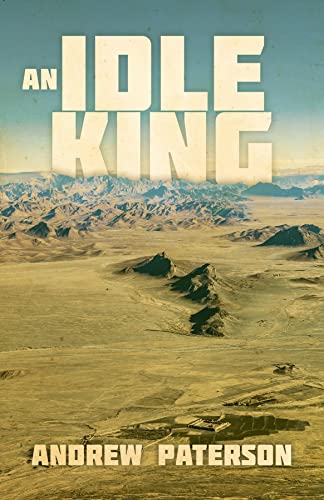
AN IDLE KING by Andrew Paterson #RBRT #TuesdayBookBlog

4.5 out of 5 stars


On Amazon (universal link)
On Goodreads


How I discovered this book: it was submitted to Rosie's Book Review Team, of which I am a member.

In a Nutshell: Military drama set mostly in Afghanistan

'An Idle King is a modern retelling of an ancient story about lost soldiers who can never go home.'

Callum King, a former army officer, is trying to come to terms with civilian life, including family difficulties and the depressing veterans' meetings.  Following news about one of his soldiers who was involved in the incident that led to Callum's discharge, he joins a team employed by a private security company, going back into Afghanistan for a chaotic, dangerous and mysterious mission.

That the author has a military background is clear from this book, not only in the practical detail but the way in which he describes the emotional state rigours of his characters.  The book is extremely well-written and certainly kept me turning the pages; Andrew Paterson has a good deal of understated talent.

The secondary characters are a fairly stereotypical bunch that one would expect in a story of this genre, whether in a book or a film - the naïve newbie, the brute, the big fatherly guy who doesn't talk much, the one female officer who becomes his right-hand-woman, the psychological wreck ... but because they're so well-drawn they didn't feel clichéd at all.  Callum himself is complex and confused; although the book is written in the third person, it still manages to show us inside his and others' heads rather than coming from a detached, omniscient narrator.

The revelation about the true nature of the mission comes as a shock to the reader as well as to Callum - it says a lot about this world, and none of it good.  There were so many quotes I loved, that spoke about the wider world as well as the country that Paterson clearly has great feeling for:

'Your people have been coming here for thousands of years trying to conquer our country.  You might as well throw sand against a mountain.'

'Habs spots a caravan of Kuchis trundling along the dried out riverbed ... mostly men in long wool coats, shepherding goats and sheep.  But some women, too, riding on the backs of camels or walking with small children in their arms ... together on some ancient migration, following routes seared deep into their forgotten histories.'

'Nation states are finished.  The future is the market state.  Instead of parliament and politicians, now the world's run by hedge fund managers and venture capitalists.'

'Callum knows all these men even though he hasn't met them before ... the scars on their faces, the missing limbs, the suffering in their eyes.  They're the children of war, soldiers in name only.  Boys who grew up without fathers.  Boys who were handed a rifle or the trigger to an improvised explosive device by old men who live far away ... and when the old men were finished with them, they were tossed aside like spent shell casings.'

'They're two old soldiers who went away to fight wars in far off places started by fat men for petty reasons.'

The ending is one of those that offers some resolution but not too much; it's sad and kind of mournful, but so right for the story.  It really is a very good book; I'd most definitely recommend.


Thursday, 30 September 2021

I Jonathan, A Charleston Tale of the Rebellion by George W B Scott #RBRT

5 out of 5 stars


On Amazon UK
On Amazon.com
On Goodreads


How I discovered this book: it was submitted to Rosie's Book Review Team, of which I am a member.

In a Nutshell: Historical drama about Charleston during and after the American Civil War.

Jonathan Vander is marooned in Charleston on his way back to his hometown of Boston, just as the Civil War is brewing.  Circumstances leave him with nothing but the shirt on his back, but he makes himself a life there.  He does not fight in the war; this is more of a social than a military history, showing how the war affected the people during and for many years after.  

The book is written as though a third hand true story; as an old man, Jonathan gives his account to his great-great nephew, who then gives it to the writer.  It is one of those novels that you're aware of being a heck of an achievement, all the way through; the research that has gone into it is evident without one ever feeling that one is reading research.  It's highly readable, and I loved the writing style; it was a delight to read an author who uses the language so well, and is acutely aware of the words and phrasing that would have been used in this period in history.

I particularly liked Jonathan's observations about the futility of war; there is a good section about this in the chapter Laurels of Glory.  And I loved this:

'Duty to an abstract government whose purpose was to use the heroic idealism of youth to forward the goals of the venal wealthy.  Is it not always so?'

The observations and accounts of the attitudes towards the slave trade and segregation were most interesting; I was surprised by some of them.  'Several fine hotels on Broad Street by St Michael's Church were owned by free blacks, serving only whites.  Some freemen were themselves slaveowners, buying them to use as labourers'.  As always with historical events, though, you cannot judge them by the outlook and culture of today's world.

I found the end of the book, about the aftermath, most emotive, not to mention the moment when the reader is told what the 'I' in the title means - it is not as I'd assumed.  Now and again I felt the story meandered a mite too much; it is a very long book and I felt it could have been edited down just a little. However, I could not give it anything less than five stars, and highly recommend it to anyone with a particular interest in the American Civil War, or historical fiction generally.


Monday, 30 August 2021

SHIPWRECK by Gemma Lawrence @TudorTweep

5 GOLD stars


On Amazon UK
On Amazon.com
On Goodreads


How I discovered this book: a favourite author, and I've read Books 1 and 2 in the series

In a Nutshell: The life of Empress Matilda, shortly before and after her disputed reign as monarch of England.

What a marvellous book this is - I loved every word.  By far my favourite so far of this series.

'All stories begin with Water'.

In line with Gemma Lawrence's many other tales of English women of history, this begins with Matilda in old age, pondering the waters of life and death, God and free will, winter, youth and old age, power and the accumulation of wisdom.  So beautifully written I highlighted far too many passages to add to this review; the two that follow are maybe not the most lyrical, but were some of the first to jump out at me.

We spend our lives trying to forget we are but temporary creatures, that Death will come one day.  All things we accumulate, money, clothes, possessions, houses, even love are but loaned to us, we castellans of all that life provides.  We are here to carry the story on, take it to another page, pass it to another ... what matters is the torch, the light we pass on, the shadows that light casts.

When fools ask why God, all powerful and of goodness made would allow sin and evil to exist, I shake my head...he granted free will so when and if we choose to do good, it is our goodness, worth all the more for we could have worked evil. 
God wanted us to learn, and we learn more from making mistakes.  Without free will there would be no mistakes, and so we, His children, would never grow.

Before reading this book I knew nothing about the fight between Matilda and Stephen for the throne of England, except that she gained recognition as rightful monarch but was never crowned, then the tables were turned and Stephen was crowned a second time.  I was to learn about the part Stephen's wife, another Matilda, played in the strategy of this war; of course, as with the Wars of the Roses, the victories won by the women, away from the battle field, featured little in the history books until recently. Our Matilda talks much about the lot of women, throughout this book - and here's something I learned: long ago, the Queen in chess was all but useless, moving only as the King, sticking by his side.  I wondered who changed her into the most powerful piece on the board, and when this happened; I suspected it was around the time of the Tudor women, so looked it up.  The modern move began in Spain during the time of Queen Isabella I - Catherine of Aragon's mother.

The military strategies and ways of the 12th Century world are fascinating to read about; more than ever, in Ms Lawrence's books of these pre-Plantagenet times, I felt the atmosphere of those castles, could imagine myself in Matilda's shoes, every step of the way.  From when she captures Stephen, the constant sense of foreboding made this such a page turner, as her older self warns the reader that she got so much wrong.  Not least of all, she was not confident enough to be the Matilda that her supporters loved, but thought she must transform into, an almost sexless ruler, cold and hard as steel, rather than be criticised simply for being a woman.

We can't imagine the hardship people lived through in those days, though at times, when I read about Robert and her other friends fleeing cross country on foot, hiding from Stephen's armies, trading even their clothes for a place to stay or something to eat, I thought, maybe this is truly living—knowing danger and hunger and still waking up to walk another day, as opposed to the cossetted lives we live now.  A romantic notion, I know.

I liked this: 'Heinrich once said to me that the appetite often feeds on eating, that when one has not eaten for a while the belly ceases to protest, for it assumes there is no food and there is no sense squalling like a child for what it cannot have'.  Applicable to much.

The devastation that was wreaked on Winchester and Oxford during this war, in particular, made me contemplate how nothing changes or will ever change—those of money, born into power, set apart from the common man, see them as collateral damage when working or fighting to get what they want, even though the good amongst them might regret this.  They send people out to fight and die, laying waste to their homes, food, livelihoods, so that they might wear the crown (metaphorical or otherwise) and gain what they consider to be their rightful seat of power.  Matilda contemplates all this and more throughout the her lengthy and gradual downfall, when she learns so much and becomes, paradoxically, a woman worthy of a crown.

The book ends with the battle all but lost, in Oxford castle under siege and almost out of food, when Matilda and three loyal guards walk out into the snow to they know not what, so that those in the castle can safely surrender.

I can't wait for the next book, in which Matilda campaigns for England in the name of her son, Henry - who becomes, of course, Henry II.  This book works as a stand alone, and I can't recommend too highly.


Monday, 5 July 2021

THE WHITE RAJAH by Tom Williams @TomCW99 #RBRT #TuesdayBookBlog

5 out of 5 stars


On Amazon UK
On Amazon.com
On Goodreads


How I discovered this book: it was submitted to Rosie's Book Review Team, of which I am a member, though I'd bought it anyway.

In a Nutshell:  the story of James Brooke, who became the ruler of Sarawak in Borneo, in the 19th Century.

I read the third in this series (the Williamson papers), Back Home, five years ago, and adored it - they're all stand alones.  I read Book #2, Cawnpore, shortly afterwards, liked it but in a 4* rather than a '5* OMG' way, and never got round to reading The White Rajah. Then I watched the film Edge of the World, starring Jonathan Rhys Meyers as James Brooke, and thought, I know of a book about this...

In short, it's a fair bit different from the film, in that it's written from the fictional John Williamson's point of view - he is cast as an interpreter who went with Brooke to Borneo.  However, I recognised the atmosphere and the chain of events, but even if I hadn't, I thoroughly enjoyed this book - and apparently it is far more historically accurate than the film!  Tom Williams is a fine writer and a most engaging storyteller, his style perfect for the time period, and I was engrossed from the first page.  His characterisation is subtle and clever, and the narrative is not without humour (the earlier Governor of Sarawak's military strategy).

I loved reading about the different tribes in their long huts and the traditions; I would have liked to read more about them.  Of course, the attitudes of the British men are of the time, and at first they see it as their God-given right - nay, duty - to bring 'civilisation' to the natives, though there is a rather nice passage in which Williamson observes a tribe and considers that they seem quite happy and efficient as they are, thank you very much.  About the Dyaks: 'These were a people who knew not the poorhouse nor the lockup, whose lives were not blighted by working in great factories.  They knew nothing of steam locomotives or spinning machines but led a simple life at one with nature.'  

Highly recommended:  'A tale of adventure set against the background of a jungle world of extraordinary beauty and terrible savagery'.


Sunday, 13 October 2019

Little Known Gems: Part #1: Post Apocalyptic/Dystopian/SciFi/Military


Why do some books do well on Amazon and some don't?

After 8 years of being involved in the self-pub world, I've come to the conclusion that Amazon sales can (but not always) have little to do with the book's quality, exposure on social media, the cover, the blurb, the genre, whatever.  It might be simply that it never got enough initial, regular sales and reviews to click the Amazon algorithms into 'start recommending and making generally visible to readers' mode.   

And if your book doesn't hit that wave, it can become all but invisible on the site where most people buy their ebooks.  The less it sells, the less it will continue to sell.  If Amazon was a physical library, it would be tucked away on the bottom of a dusty shelf at the back.


I decided to start a short (and probably irregular) series of recommendations for books that really ought to sell brilliantly, because they're exceptionally good.  

This isn't just me giving a shout-out for some writer friends, or saying, 'this is quite good, you might like it'.  I'm saying this: 

If this is your genre, you'll love it, 
because it's seriously terrific

I've chosen books that an Amazon robot must have mis-filed on that dusty back shelf, or left in the stockroom by mistake—today, though, they're where they should be: on one of those cool little display things at the front, near the counters :)


Click the book's title for my review, and Amazon buy links


The Last Feast by Zeb Haradon (novella)
SciFi - Post Apocalyptic - Space


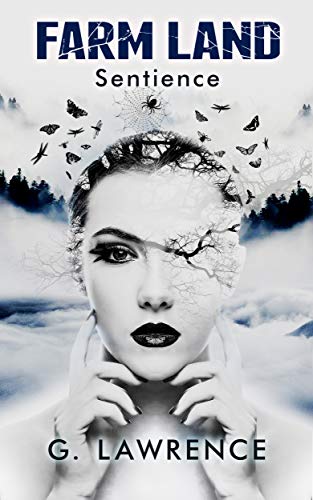
Farm Land: Sentience by G Lawrence
Dystopian - SciFi - Horror


The Bledbrooke Works by John F Leonard
Horror


The Morning Star by C W Hawes
Post Apocalyptic 


Jonah by Carl Rackman 
Military - Paranormal - Thriller


October Rain by Dylan Morgan (novella)
SciFi - Post Apocalyptic - Dystopian


Future Perfect by Katrina Mountfort
Sci-Fi - Dystopian - Post apocalyptic


By The Feet Of Men by Grant Price
Dystopian - Post Apocalyptic - Climate Change


The Turning of the World by John Privilege
Post Apocalyptic 


X by Jack Croxall (short story)
Post Apocalyptic


Next time: Historical Fiction


Monday, 26 August 2019

THE HANDMAID'S TALE by Margaret Atwood

5 GOLD stars

On Amazon UK
On Amazon.com
On Goodreads


How I discovered this book: I've read one of Margaret Atwood's dystopian books before, Oryx and Crake, and liked it, though, like thousands of others, I was inspired to read this after watching the TV series.

In a Nutshell: Dystopian, set in an imaginary former America, in the 1980s

If you're one of the five people in the world who haven't seen the TV series,
much of America has become 'Gilead', ruled by Christian fundamentalists and cut off from the rest of the world; this is the story of one of the 'handmaids', rare fertile girls forced to bear children for high profile couples after sterility has become commonplace.

The story is told in the first person by 'Offred', though in the book we never have her real name confirmed, or that of her child.  It is slow in pace, especially at first, but this does, of course, reflect the pace of her life.  I did wonder, during the first few chapters, if anyone reading the story without having seen the series might take a while to appreciate it or even understand what is going on, as the world in which 'Offred' now lives is revealed to the reader only gradually.  I adored this book, all the way through, and couldn't read it fast enough, though I did feel frustrated by the lack of explanation - but when it comes, half way through, it is all the more shocking to find out how the 'normal' world became Gilead.


Although written in 1984, the story is chillingly prescient; Offred talks of the false flag* operations, designed to create fear within the people, so that they will not complain when their privacy and liberty is taken away ... then there is the lack of paper money, with transactions made only via 'Compubank'; another withdrawal of privacy and removal of a person's ability to stay anonymous.

Even though the people are kept relatively safe, they are fed, and have comfort and adequate medical attention, it is the the removal of liberty and the ability to communicate, and the ever-present, underlying threat should one not comply with all rules, that makes this the worse sort of horror story.

Obviously the TV show has ratings to think about, and so the story develops differently; viewers will want some happiness and resolution for June/Offred, some reconciliation, and a 'personal journey' for her, in which she grows, positively - but this was written in a time before heroines were required to be kick-ass.  The end is left open for almost all the characters... but after it finishes there is a great addition to the book that rounds it off in a different way: a transcript of a lecture given in the year 2195, talking about all that is known about the Gileadean era, much of it from Offred's account.  

Good news for those who, like me, can't get enough of either the book or the telly version - the long-awaited follow-up, The Testaments is out on September 10th.  


*...countries organize attacks on themselves and make the attacks appear to be by enemy nations or terrorists, thus giving the nation that was supposedly attacked a pretext for domestic repression and military aggression.


Thursday, 1 August 2019

KILL CODE by Clive Fleury #RBRT

3.5 out of 5 stars

On Amazon UK
On Amazon.com
On Goodreads


How I discovered this book: it was submitted to Rosie's Book Review Team, of which I am a member.

In a Nutshell: Climate change, dystopian, set on the west coast of the US 

At some time in the relatively near future, climate change has affected the world in such a way that those who can afford good food and fresh water live in protected zones, with the majority of the population struggling to survive.  Hogan Duran is a former cop scratching a living, until he is given the opportunity of a lifetime with the NSC - the all-powerful National Security Council.  

I loved the first 40% of this book.  The world-building was terrific, and I was engrossed.  When Hogan gets his life-changing opportunity, he and many other candidates are put through a 'last man standing' series of tests, which was also a real page-turner; this part was great, original and gripping.  Later, there is a jaw drop of a twist when he discovers that his experiences are not as they seem....

The second half of the book is mostly taken up with action scenes and daring escapes, as some of supposed 'goodies' come up against the Krails, a rebel biker gang.  Here, I found that my interest wandered; I rarely find that action in books works anything like as well as it does on screen; there is too much explanation of 'this happened then that happened', and much of it seemed like the stuff of superheroes rather than a man who has been undernourished for years.  I was also unconvinced by the escape in the last third of the book, when the all-seeing people in charge suddenly seemed not so all-seeing after all, enabling Duran and his friends to do all they did.

I thought the characterisation of Duran was extremely well done in the first half of the book; I could really see him.  However, I often find in action books written by men that the women are just men with a female name, or a one-dimensional kick-ass heroine fantasy who is naked as often as the story will permit; Ruby was never more than a word on a page for me.  Also, the plot delves in and out of virtual reality, which was sometimes confusing.  

I liked the ending, and may possibly check out the next in the series because I like the premise, but I'd have preferred it if the book had concentrated more on the characters and less on the outlandish action plot of the second half.


Monday, 15 July 2019

TREAD: Fallen Nation by Jeff DeMarco @DeMarcoWriter

4 out of 5 stars

On Amazon UK
On Amazon.com
On Goodreads


How I discovered this book: Twitter

In a Nutshell: Post-apocalyptic/military novella

Lately I've read some of a post apocalyptic series concentrating on the survival aspect, and a novella that I'd class nearer the horror end of the genre; Tread:Fallen Nation, however, is military-orientated.  All of these books have one aspect in common: the effect of a global disaster on the people.

The main character in this book is Evan, a soldier back from the Middle East who finds his country in meltdown after a mysterious virus has devastated the land.  The US is, in effect, in civil war.  Evan is already disillusioned about the ethics of some of the military, and war itself, and becomes more so as his new tasks are laid out before him.

I knew nothing of the author's background until I read the notes at the end, but it was clear he comes from a similar background to Evan; the details, not only about the weaponry but also the practices, are most convincing, at the same time as being written so that a layperson can understand.  I liked, too, that he destroyed certain myths about the effects of an EMP, which has probably spoiled me for books of this genre that involve such things!  

'Hell, the whole idea of electromagnetic pulse or nuclear detonation permanently damaging electrical systems and communications is just garbage.  Just sayin'; this ain't the movies'

He has a cool writing style, perfect for the subject matter, and I was particularly impressed by the dialogue, which struck just the right chord.  He delivered a good atmosphere of bleakness, using few words.

'Evan rounded the rocky outcropping and found a man in dirtied clothes, his face covered by a white and black shemagh, hunkering down against the boulders as though clinging for dear life.  In the insurgent's eyes ... no, the man's, not the animal he'd been conditioned to see them as, he found only fear.'

I felt it could do with a final round of copy-editing to iron out minor proofreading errors and add a bit of clarity here and there, but I'm one of those people who winces at misplaced commas, and it is far better presented than many self-published books of the genre.  I would definitely recommend it to any fans of military-oriented post apocalyptic stories.

Monday, 14 January 2019

THE WORST JOURNEY IN THE WORLD by John R McKay @JohnMcKay68

5 out of 5 stars

On Amazon UK
On Amazon.com
On Goodreads


How I discovered this book:  I read this review on EmmabBooks.

In a Nutshell: Fiction, WW2 Naval supply runs between Liverpool and Russia, skirting enemy territory.

This book gripped me all the way through.  George Martin was a young working class man from Liverpool when he joined the navy, and most of the book is about the horrendous Arctic conditions of his voyages to Murmansk, a period spent in this desolate, war-torn part of Russia in what passed for a hospital, the destruction of his ship, and a hellish few days on a lifeboat in unbelievably cold conditions, in which several of his friends perished.

It is also, of course, a story about those friendships and the comradeship that exists in the most testing of times.  The book is obviously so well-researched; what struck me most was what the human mind and body will endure. Sometimes the book is quite poetic - philosophical, even.  George's first impression of the Arctic ocean, when he hears the songs of the whales beneath the sea: 

'We were invaders, after all.  All of us.  Both us and the Germans should not be here.  This place did not belong to any of us.'  

John McKay's writing is so conversational and easy to relate to that I felt as though I was reading a memoir, much of the time.  George was, to me, a real person, not a fictional hero.  Threaded through the tales of life at sea is the story of his home life in Liverpool, in particular a relationship with a girl called Glenda.  This secondary story is interspersed at exactly the right times, and in the end, the two stories converge.

It really is a terrific book.  Highly recommended.


Saturday, 22 September 2018

INCENDIARY by Carl Rackman @CarlRackman

4.5 out of 5 stars

On Amazon UK
On Amazon.com
On Goodreads


How I discovered this book: After reading Jonah by this author, there was no way I was not going to read his next novel! 

Genre: Thriller, horror, military, government conspiracies, dragons.... yes, really.

When I read that this book was a naval military type thriller that featured a fire-breathing, wingéd monster, I couldn't see how the two would work together, to the extent that when Mr Rackman first tweeted about it I thought he was joking.  But he has totally pulled off the challenge with Incendiary ~ the dragonesque Horla and her species are completely plausible and I hope they are real.

The story starts with a gripping scene from the Vietnam war, then moves onto a ship with a top secret cargo ~ all the stuff of which good action horror stories are made.   The novel is pacy and suspenseful, factually convincing and cleverly put together, told from the third person points of view of Dr Mel Villiers, researcher, and the man with whom she has recently become involved, Captain Steve Warren from the elite SBS unit.  Threads of governmental falsehoods, cover-ups and conspiracies run through the book as it moves from Porton Down research centre to a submarine in the Arctic ~ which is where the greatest twist of all takes place.  Got me there; I love a surprise I didn't see coming, and it's one that turns the whole story on its head.

The thought of a world in which the human is not the dominant species gives much food for thought, as do several passages about the way in which those in power keep hold of it; the book has a fair bit to say, as well as being a good story.  It's an unusual, intelligently-written page-turner, and the Author's Note stuff about dragons at the back is worth reading, too.  Tick! ✔


Thursday, 16 November 2017

JONAH by Carl Rackman @CarlRackman

5 GOLD stars

On Amazon UK
On Amazon.com
On Goodreads


How I discovered this book:  I read the author's debut novel, Irex, after chatting to him on Twitter, and thought it was very good indeed, hence the purchase of this one!

Genre: WW2 Naval Thriller 

This book is stunningly good.  I finished it in the early hours of this morning when my eyes were tired and I wanted to go to sleep, because I had to know what happened. 

The blurb (extract):

The North Atlantic, 1940. A British destroyer pounces on a seemingly abandoned U-boat, leading to a spine-chilling encounter.  Five years later, the US Navy destroyer Brownlee grimly prepares to battle a swarm of Japanese kamikazes at Okinawa.

Mitch “Lucky” Kirkham, a young gunner on the Brownlee, wakes up miraculously unscathed after his crewmates are killed in a fearsome kamikaze strike.

Bullied and resented amid accusations of cowardice and worse, Mitch re-boards his patched-up ship for the long voyage back to San Francisco. All he wants is to go home.

But far out in the boundless emptiness of the Pacific, a strange madness begins to seize the sailors on the Brownlee. Terror, hysteria and suicide torment the men amid sightings of ghosts and a terrifying monster that stalks the ship by night.

Jonah ticks every single box.  It's exceptionally well written, interspersed with tales from members of the crew from before the war, relevant to the plot (love little flashbacks like this!).  It's meticulously researched, completely convincing, but Rackman hasn't fallen into the amateur's trap of explaining naval terms to the layman; it is assumed that the reader will gather what they mean, sooner or later, and I did.  There's a glossary at the back, if you need it.

The story is utterly gripping and unpredictable, the sense of menace builds up at just the right pace, and even by the last chapter I had no idea of the outcome (and, indeed, thought it would go another way).  The characterisation is well defined, the dialogue spot on, and it's edited, proofread and formatted to the best of traditional publishing standards.

It's really, really, really good.  You should download it.  Immediately.  Definitely one of the best five books I've read this year.