Showing posts with label Plantagenets. Show all posts

Monday, 2 February 2026

FOOTNOTES: The History behind the Novels by Judith Arnopp @juditharnopp

 5 out of 5 stars


On Amazon (universal link)
On Goodreads


How I discovered this book: Saw it on X, big fan of this author

In a Nutshell: A selection of articles that give background information about the subject matter of the author's novels

In the introduction Judith Arnopp apologises for any repetition in this collection of blog posts and articles from previous years, as her books were in progress.  Yes, there was some repetition, but it didn't matter to me, because so many of the articles were fascinating.  

The chapter about the Mary Rose made me think, 'I have to see this', to the extent that I've looked up the site and trains, and asked my sister if she fancies taking the trip with me.  The one about Harlech Castle and Owain Glyndŵr made me want to read a book about the subject.  'The Mysterious Death of King William II' ensured that The Forest Dwellers will be the next book of Ms Arnopp's that I read.  Even the chapters about people I already knew a lot about, like Margaret Beaufort and Henry VIII's wives, I still enjoyed reading.

And now I want to visit all those ancient Welsh churches, too - this book is a little gem!


Monday, 6 October 2025

A SONG OF SIXPENCE by Judith Arnopp @JudithArnopp

 5 out of 5 stars


On Amazon (universal link)
On Goodreads


How I discovered this book: from the back catalogue of one of my favourite authors.

In a Nutshell: the story of Elizabeth of York and Perkin Warbeck

Having recently read Judith Arnopp's latest book, about Margaret of Anjou (review HERE), I was still in Wars of the Roses headspace, and had to read more.  This starts a little while before Elizabeth of York (daughter of Edward IV and Elizabeth Woodville) marries Henry VII as a result of his victory in battle over Richard III.  Running alongside Elizabeth's trials, hopes, fears and joys as Henry's queen is the story of Perkin Warbeck, who claimed to be her brother Richard, one of the two princes in the tower whose fate remains a mystery to this day.

This book made me think of Phillippa Gregory's book The White Queen, in that Ms Arnopp has chosen the storyline that Perkin Warbeck actually was Richard; I liked this.  Her version is absolutely feasible, and ditto what happened to Prince Edward.  In fact, not just feasible but likely.

I liked Elizabeth, I wanted to like Henry, and was pleased when they found happiness.  Most interesting, also, was how Henry VIII the child was portrayed, and the differing personalities of his surviving sisters.  The Mary of this book absolutely would have run off and married Henry Cavill, no problem!

Loved it.  Every word.


Sunday, 3 August 2025

MARGUERITE: Hell Hath No Fury! by @juditharnopp

5 GOLD stars


How I discovered this book: a favourite author

In a Nutshell: The story of Marguerite of Anjou

Loved, loved, loved this excellent book. I was so engrossed all the way through and I need a bit of breathing space before starting something else, because I keep thinking about it.  Yes, that good.

This was particularly fascinating for me because although I know the ins and outs of the later years of the Wars of the Roses, I had huge gaps in my knowledge about how it started and how Marguerite got to where she was.  Also, it was most interesting to read about the younger years of the three sons of York, about Elizabeth Woodville and her mother Jacquetta, about Margaret Beaufort and others.

Painted as she is all too often in history, I too thought of Marguerite as a ruthless vixen, but Judith Arnopp portrays her in such a way that one can totally see her point of view, and what drove her on, and on and on.  Of course history is written by the victors; I wonder if Ms Arnopp's versions of Richard of York and Edward of March (never mind Warwick) are also more accurate than those seen in other books, not least of all those made into BBC TV dramas.

I was thinking, afterwards, about how so many lives could have been saved, including almost everyone Marguerite cared about, had she succumbed to the inevitable and allowed Edward to take the crown the York army believed was rightfully his, but there is no definite answer to who should have worn it; the lines of succession were so ... messy.  I wondered if she would have fought so hard if just for her husband, poor Henry VI, if there was no son.  Would the honour of the country she was fated to rule be enough?  Motherhood made her a fierce lioness, but so many died for her cause; was she right to let this happen? 

If only she could have married Edward of Somerset instead!

Anyway, this is a terrific book in which I became so emotionally involved.  I was impressed by the way Marguerite's life fitted so perfectly into one novel without ever coming across as written at too fast a pace; the detail is all there where you need it.  This is a writer who knows when a year needs one paragraph and moment needs two pages.  An absolute winner, and a 'must read' for anyone who loves this period of history.  Well done, Judith Arnopp - every book is better than the last!


Sunday, 30 June 2024

NEST OF THE GYRFALCON by Gemma Lawrence @TudorTweep

 4 out of 5 stars


On Amazon (universal link)
On Goodreads


How I discovered this book: I've read earlier books in the series

In a Nutshell: The middle part of Eleanor of Aquitaine's life


Monday, 12 February 2024

I, RICHARD PLANTAGENET: Book 2: Loyaulte Me Lie, by J P Reedman @stonehenge2500

5 out of 5 stars


On Amazon (universal link)
On Goodreads


How I discovered this book: Already reading this series

In a Nutshell: The later life of Richard III

Excellent book, this one.  Probably my favourite of the series.  It starts with the aftermath of Edward IV's death, and ends at the Battle of Bosworth Field.

Much of this story deals with the fate of Edward V and his brother, the 'Princes in the Tower', and does much to dismiss early portrayals of Richard as a demonic fiend who probably murdered his own nephews and poisoned his wife.  The scenarios put forward by this author are completely feasible and sound a good deal more likely.  Of course the period of the Wars of the Roses was turbulent and dangerous indeed, with so much treason, nobles turning their coats according to whichever cause would benefit them the most; the impression I got was that Richard did what he had to do, but only when he really had to.  Looking at the claims to the throne, it does appear that the Yorkist one was the most valid.

The development of Richard's personality was so cleverly written, as he grew in confidence and became more comfortable within his role as king.

I loved the research that has clearly gone into this book, particularly that about Northampton, near the beginning.  I lived there for 40 years, and was most interested to see that names of some streets date this far back (Gold Street, Marefair, Sheep Street, the Drapery, Greyfriars).  The 'Guild of the Holy Rood' (I have a friend who lives in Holyrood Road).  The abbey of St Mary De La Pre (an area of the town is called Delapre).  Oh, and the Bantam Cock pub, which kept its name until the end of the last century.  In this area is the Queen Eleanor Cross, also mentioned; a marker on the funeral procession for Edward I's beloved wife.


This is a first class series, highly recommended if you are as fascinated by this period in history as I am.   


Monday, 16 October 2023

I, RICHARD PLANTAGENET : Tante le Desiree by J P Reedman @stonehenge2500

5 out of 5 stars


On Amazon (universal link)
On Goodreads


How I discovered this book: I read and loved earlier books about Richard, Duke of Gloucester by J P Reedman, and finally decided this had been on my TBR list for long enough!

In a Nutshell: Richard's life up until the age of 30.

I loved this book, totally engrossed all the way through.  There is so much detail about customs and the way people lived back then, that I found fascinating to read about.

Throughout the years this novel covers, J P Reedman has cleverly developed the main characters as they age.  Richard becomes harsher, more determined, and with an increasing sense of right and wrong, while the negative aspects of George's personality are magnified; his stubbornness, inconstancy and drinking.  Edward the King becomes almost a parody of himself, and I was struck once more by how his grandson Henry VIII was all him, with few traits inherited from his father, Henry VII.

The book is written in Richard's first person, but I was aware of how deftly the author has made clear to the reader the thoughts of other characters, too, even though they may not have expressed them verbally.  How they thought of Richard, too, as he becomes more and more like the historical figure many perceive him as.  Smart writing!

This part of the story ends when Richard is 30, just after the complicated skirmishes with the Scots, and as Edward's health is failing.  I look forward to reading the next episode very much.


Monday, 9 October 2023

DAUGHTER OF THE SUN by Gemma Lawrence @TudorTweep

5 out of 5 stars


On Amazon (universal link)


How I discovered this book: a favourite author whose new releases I usually buy immediately.

In a Nutshell: the early life of Eleanor of Aquitaine

This reminded me of the beginning of Gemma Lawrence's series about Anne Boleyn, in that it gives so much detail about the less well known, early life of an exceptional historical figure, showing how she became a woman centuries ahead of her time.

Ms Lawrence's Eleanor is not always particularly likeable (she seems most pleased with herself, particularly for the first two thirds of the book, though some might say with good reason) but the fascinating beginning of this full and eventful life was a joy to read.  I also enjoyed reading about how different the geographical borders of the world were then; countries, duchies, principalities and kingdoms that no longer exist, which does remind one that countries and borders are man-made constructs.

The part of the book I liked most was the second half, covering the period of the Second Crusade - this was absolutely riveting, throughout.  Couldn't put it down, I was excited to turn each page, and the book is worthy of 5* for this part alone.

As is usual for this author's novels, it is written in the first person.  Lawrence's Eleanor has much to say about the subjugation of women and the folly of men, though given her experiences this is hardly surprising.  The book ends as she becomes close to her third cousin Henry, later to become Henry II, and whom she marries.

I am SO looking forward to reading the next book!


'I would not have let him keep you prisoner,' growled the young idealist.  'By the eyes of God!  I would not!'


Monday, 15 May 2023

I, RICHARD PLANTAGENET - Part 2 by J P Reedman @stonehenge2500 #TuesdayBookBlog

 4.5 out of 5 stars


On Amazon (universal link)
On Goodreads


How I discovered this book: Had read its prequel HERE, so sought it out.

In a Nutshell: The life of Richard III - his teenage years.

This is a longer book than the first, and covers the period of Richard of Gloucester's life from the ages 14 - 18, during which time his elder brother Edward IV was on the throne, though not without constant threat from the Earl of Warwick and the Lancastrians.

There is so much description of England itself, in this book; its common people, beliefs, travel, food, the customs, all of which really bring the 15th Century to life, and I loved that aspect of it.  Richard himself is shown as such a loyal, modest and thoughtful young man, so much so that it is hard to picture how he gained such an evil reputation later in history.  I found the way that Elizabeth Woodville and her family are portrayed most interesting; it made me wonder how Edward might have fared had he made a political marriage rather than being swept along by love.

At times I felt that the book was a little padded out, as though the author was determined to get every piece of research into the book; I think it would have been even more enjoyable if it was chopped down a little, but I did love it, and look forward to reading the next one.


Sunday, 30 April 2023

I, RICHARD PLANTAGENET by J P Reedman @stonehenge2500 #TuesdayBookBlog

5 out of 5 stars


On Amazon (universal link)
On Goodreads


How I discovered this book: Recommendation - can't remember who from, alas; Amazon tells me I downloaded it in 2021.  I was looking down my Kindle Unlimited library to decide what to return; when I saw it, I wondered why I had not read it before!

In a Nutshell: Part 1 of a trilogy about Richard Plantagenet, later to become King Richard III

This book covers Richard's childhood, from little more than infancy to the age of fourteen.  It is told in the first person, which I always like best for historical fiction based on fact.

I loved this book, so much that I downloaded the next two before I'd finished it (and am already reading #2).  J P Reedman has written Richard as I imagined him: a loyal, intelligent, studious and serious boy, wise beyond his years in many respects.  The other Yorks and those close to them were also portrayed exactly as I see them - Edward IV the golden, kingly warrior, whose over-confidence and appetites could sometimes be his undoing; the gluttonous, garrulous George, Duke of Clarence; dashing, intense Richard, Earl of Warwick.  Quiet, reserved Anne Neville, flirtatious Isabella, and the ambitious Elizabeth Woodville.


I know the story of this period of history well, so I was most interested to see how various events would be depicted through Richard's eyes.  J P Reedman has artfully executed developments that occurred outside Richard's orbit; there are no clumsy monologues from other characters to let the reader know what is happening, few unrealistically overheard conversations.  This is the history as Richard would have seen it; some events of importance are hardly mentioned, because they would not have meant much to a child.

It is clear that much research about the time has gone into this book, though it is never intrusive.  Instead, it immersed me in the period.  I loved reading about the journeys from one place to another, what the country was like at the time, and about the halcyon days Richard spent at Middleham castle under the tutelage of Warwick.

Incidentally, I have often wondered what Edward IV would have made of his grandson and great-granddaugher: Henry VIII and Elizabeth I.

Highly recommended - now, to resume my reading of Book 2!

.... and here's one of the articles about his remains being found under a Leicester car park around 10 years ago: Skeleton of Richard III Found in England.


Monday, 14 February 2022

LOYALTY IN CONFLICT by April Taylor @authapriltaylor #TuesdayBookBlog

 4 out of 5 stars


On Amazon
On Goodreads


How I discovered this book: I know the author from Twitter and heard she was writing about this time period, one that always interests me.

In a Nutshell: Schemes and skulduggery during the Wars of the Roses!

Loyalty in Conflict is set in the period of the Wars of the Roses when Edward IV had been king for ten years, and when his brother George, Duke of Clarence, had teamed up with the Earl of Warwickshire to support the other side.  In case you are not familiar with this time in history, April Taylor has provided a brief and helpful summary of the state of play at the time when this story starts.

As the story is named 'A Gideon Rooke Adventure', I assume there will be more; Gideon is the son of the marshal at Lord Richard Welles' Lincolnshire manor at Eresby.  He works in the stable, though his basic intelligence must be hidden in a time when those of his station were thought of as dim-witted.

The household supports the red rose, but Gideon's father believes that Edward IV is the king the country needs, and sets out a plan for Gideon to inform the king about a planned rebellion.

The book is flows so well, a very 'easy read', sometimes with an almost 'cosy mystery' feel to it.  Gideon's personal development once he steps outside his own little world is most interesting, and the characters of Edward and Richard, Duke of Gloucester (later Richard III) were just as I've always imagined them.  As I often find with historical fiction of this period, an aspect that I loved was the detail that showed how people lived in this time; the book is clearly well researched.

Later in the book is a detailed account of Gideon's impression of the battlefield, which is shocking and moving, and shows that battle is no glorious adventure.  I look forward to reading more about this world that April Taylor has created. 


Friday, 24 February 2017

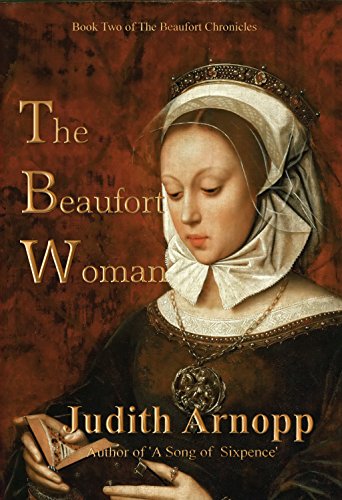
THE BEAUFORT WOMAN by Judith Arnopp @JudithArnopp

5 out of 5 stars

On Amazon UK HERE
On Amazon.com HERE
On Goodreads HERE


How I discovered this book:  I'd read the prequel, The Beaufort Bride, and wanted to read more!

I liked The Beaufort Bride ~ it was a nicely written piece of historical fiction that got better as it went along, certainly good enough to make me want to read the next book, but I wouldn't have numbered it amongst my favourites.  This book, however, is in a different class.  I don't know how long after the first book it was written, but the writing itself seems to have come on in leaps and bounds.

At first, I wondered if it was simply that I was now reading about the woman, not the young girl, but it's not that; I just felt more passion and depth in this book, far more complex characterisation.  I felt as if I was stepping into the story, rather than just reading about Margaret.   

It's interesting to see different historical writers' take on history, and in The Beaufort Woman, Judith Arnopp had made more of Margaret's involvement with Elizabeth Woodville, the wife of Edward IV, than was probably factual, but I can see why she did this; it's so hard, when writing about a subject as broad as the Wars of the Roses from one point of view, to deliver information, as the key events happened in so many places, with not everyone party to all of them.  I think Ms Arnopp managed to do this masterfully.  As with most books about this complex period, I'd say that it helps if you already know the history before reading the fiction.

But what a story!  I remember commenting after I'd read another book about the period (Jasper, by Tony Riches), that one hardly needs the intrigue of fiction like Game of Thrones, when this stuff all really happened.  This was brought home to me once more.  And something else:  I mentioned, in the Beaufort Bride, that I thought Elizabeth I must have taken certain traits from her great grandmother.  In this, it struck me how Henry VIII took after his grandfather, Edward IV.

Loved it.  Highly recommended.  Now I'm going to see if the third part, The King's Mother, is available yet. 


Friday, 10 February 2017

THE BEAUFORT BRIDE by Judith Arnopp @JudithArnopp

4.5 out of 5 stars

On Amazon UK HERE
On Amazon.com HERE
On Goodreads HERE

How I discovered this book: I'd heard of the author via various history blogs, and Twitter, and a writer/editor friend told me she was good.  Margaret Beaufort is one of my favourite historical characters, so I thought I'd give this a go.  Kindle version is £2.99, or free on Kindle Unlimited.

This is a short novel, about Margaret's childhood, her marriage to Edmund Tudor and the birth of her son, Henry (later to become Henry VII).  It takes us to the point in her life when she meets Henry Stafford, her second husband The Kindle version ends at 90%, after which there is a brief history of Margaret's life and the beginning of the next book, The Beaufort Bride.

I enjoyed this book, the style is clear and readable; at first I thought it too simply written, but then realised that, of course, I was reading through the eyes of a twelve year old.  The pictures painted of the castles and travels through the countryside of 15th century Wales brought the book to life for me.  Not very much detail is known of the subject's early life, but the fiction in this novel is convincingly imagined.  Once or twice, in dialogue and actions, I felt that the author had forgotten that her subject was only thirteen, but on the whole I found the book quite absorbing.

When I first became fascinated by Plantagenet history, I thought Margaret Beaufort might be too straight-laced and pious for me to have much interest in her, but as I read more I saw possible hidden depths, and Judith Arnopp has brought these to light well.  It occurred to me that perhaps Elizabeth I did not only take her many sterling traits from her parents, Henry VIII and Anne Boleyn, but also from her great-grandmother.

I liked that it was short; I prefer to read biographies like this, in shorter sections, rather than embarking upon a daunting, long book.  I downloaded this on Kindle Unlimited and will definitely be returning it in exchange for the next instalment.


Friday, 19 August 2016

THE BOOKSELLER'S TALE (Oxford Medieval Mysteries Book 1) by Ann Swinfen

5 out of 5 stars

Medieval Mystery

On Amazon UK HERE
On Amazon.com HERE
On Goodreads HERE


I'm such a fan of Ann Swinfen, and this book lived up to my expectations ~ don't ignore all those book promotion tweets flying past on Twitter, it's how I discovered her!

This is a cosy sort of murder mystery set in Oxford, in which bookseller Nicholas Elyot discovers the body of a student from the university floating in the river.  Sure he was murdered, Nicholas takes it upon himself to solve the crime.  I felt the plot came second place to the historical interest of the story, which suited me fine.  The book is intricately researched, and serves as an education about the time, in the most enjoyable way possible.  Beautifully written, I could imagine every scene, whether in the busy streets of the town, in the cottages, the university grounds, the dark alleys on the dangerous side of town, the roads out to Banbury, or the lanes out to the water mills.


The time of the book was of added interest to me because it takes place just a short while after the Great Plague has died out; I learned much about the long-term effects of this pestilence.  Interesting to read a post apocalyptic story from over 600 years ago; I suspect the people of the time dealt with it better than we would now, mostly because they were already equipped with the skills they would need.


The characters are real people, and, as with Ms Swinfen's other books, I felt sad when I'd finished it and eager to read more.  Highly recommended to all readers of well researched, literary historical fiction, and especially to anyone with a particular interest in the history of story writing, bookbinding and selling, and, of course, the history of Oxford.

This Rough Ocean by Ann Swinfen is reviewed HERE, with links to Flood and Betrayal (all set in the 17th Century).


Sunday, 3 April 2016

WARWICK: The man behind the Wars of the Roses by Tony Riches

4 out of 5 stars

Plantagenet historical fiction

On Amazon UK HERE
On Amazon.com HERE
On Goodreads HERE


Most interesting; this book showed me another side of the fascinating Richard Neville, 16th Earl of Warwick, otherwise known as The Kingmaker.  I liked Riches' portrayal of him as a man of intelligence and forethought, not just ruthless ambition.  Certainly made me see why he was so opposed to Edward IV's marriage to Elizabeth Woodville, too!

James Frain as Warwick in 'The White Queen' ~ it's how I always think of him!

I read this hot on the heels of the author's latest book, about Jasper Tudor; it's clear from reading this that it's an earlier book, simply because his writing has improved, as most authors' work tends to; Jasper is something of a masterpiece, whereas this is more of a very entertaining historical adventure.  I do enjoy the way Riches writes.  He sets the atmosphere of the time so well, and I particularly like reading about the battles.  This book gave me a clearer insight into exactly why the Wars of the Roses began and some bits made me smile for personal reasons: Richard and Edward at the ancient fort of Hunsbury Hill in Northampton, for instance; I used to live on Hunsbury, a residential area now built on that site.   Also, the mention of King Henry IV being cared for in Delapre Abbey, nearby ~ I was there last year with my father, taking a look at the renovations.  
 
I wonder if Warwick trod the same paths on Hunsbury as I used to?

The Wars of the Roses is such a massive subject for any novelist to take on, and Tony Riches has, once again, dealt with it very well.  There were some parts of Warwick's history with which I was not familiar, and I didn't find them too confusing!  Definitely worth the read, for anyone who wants to know more about this intriguing character.  Oh, and you'll be as interested as I was to see who a famous descendent of Warwick was, in the Author's Note at the back :)

The Eleanor Cross in Northampton, near Delapre Abbey

OWEN by Tony Riches reviewed HERE

  JASPER by Tony Riches reviewed HERE

Wednesday, 30 March 2016

JASPER: Book Two of the Tudor Trilogy by Tony Riches

5 out of 5 stars

Plantagenet/Tudor historical fiction

On Amazon UK HERE
On Amazon.com HERE
On Goodreads HERE


Reviewed by me as part of Rosie Amber's Review Team


I LOVED this book.  It's a terrific page-turner, a real adventure, from the time when the country was such a dangerous place, when men were men and women waited in castles for them to come home (not so keen on that bit, as I am sure many of the women weren't).  It made me long to go back to those times (as a man!); this book brings the England of over five centuries ago to life so well.  Book One, about Owen, Jasper's father, was jolly good, but this is what I love to see ~ a sequel that takes the story to another level.

 
There is so much written and on television about the Yorkist side of the Wars of the Roses, I find, but less about the Lancasters, so this filled in many gaps in my knowledge.  It's expertly planned; I was particularly interested to see how Tony Riches would write about events during which Jasper was far away and out of touch, like Warwick's change of allegiance, but he did this most convincingly, using the fictional Gabriel, an Irish mercenary who becomes a close friend of the hero, as a reporter of events.  Similarly, the disintegration of the Yorks following the death of Edward IV is cleverly accounted for via the messengers who visit Jasper during his exile in Brittany.  I also enjoyed the first appearance of the Duke of Buckingham, whose son causes trouble for Henry VIII, and of other characters who appeared as Plantagenet made way for Tudor. 

Jasper with Henry the boy, and Margaret Beaufort: 'The White Queen'

In my opinion this is a book for those who already know something of the history, as there are so many names and changing allegiances that, even being quite well versed in this period as I am, I had to stop and think a few times about who was who.  This isn't Riches' fault; he has dealt with a long and complicated story admirably.  On occasion I got confused about the passage of time and felt that there needed to be a gaps in the formatting of paragraphs to indicate that a year or so had passed, but I've rarely read a book of this length, covering so many events over a long period, which conveys the passing of years perfectly. 

To all avid readers of books such as the Game of Thrones series, I'd say 'read this too!' ~ it's every bit as magical, every bit as exciting - and it really happenedHighly recommended, a real achievement, and I'd just like to say that the author's note at the end brought a tear to my eye.  I shall be the first in the queue for the final part of the trilogy (and plan to read 'Warwick' in the meantime!)


OWEN: Book One of the Tudor Trilogy by Tony Riches reviewed HERE