Showing posts with label Tom Williams. Show all posts

Monday, 29 December 2025

My Top Ten Books of 2025


... as usual, not necessarily published in 2025, but that's when I read them!  

In no particular order, click the title to read my review.


Boatyard Views 

by Val Poore

A collection of Val's essays about her life on the water - 

beautifully put together, amusing and informative!


Marguerite: Hell Hath No Fury! 

by Judith Arnopp

The story of Margaret of Anjou, a major player in the Wars of the Roses


All The King's Bastards 

by Gemma Lawrence

Alternate, speculative history - what would have happened if Henry VIII had died from his jousting injury, early in 1536?  Fascinating!


Last Train to Freedom 

by Deborah Swift

A mission of great importance in the dangerous arena of Europe during WWII ... the train in question is the Trans-Siberian Express


About the Real Stages of Grief 

by D G Kaye

Part memoir, part advice - D G Kaye talks about bereavement and how she has learned to live with her loss 


Burke and the War of 1812 

by Tom Williams

Fictional account of the factual mission of James Burke, to recruit the American First Nations to fight with Britain against the US


A Pact With The Devil 

by Anna Legat

Murder and demonic possession in 15th Century Poland


Death of a Clown 

by Catherine McCarthy

The story of Charlie, the reluctant clown - beautiful book


The Long Walk 

by Slavomir Racwicz

The allegedly true story of Slavomir Rawicz, who escaped from a Siberian labour camp during World War II, and, with comrades, trekked thousands of miles to reach safety. 


The Book of Thornhold 

by Judith Arnopp

A novel of long-short stories, about a family across the centuries.  Marvellous.


I hope you will select at least one of these for your next read - you won't regret it!  

Happy reading, and happy new year!


📚📚📚📚📚


Monday, 19 May 2025

BURKE AND THE WAR OF 1812 by Tom Williams @TomCW99 #RBRT

5 out of 5 stars


How I discovered this book: it was submitted to Rosie's Book Review Team, of which I am a member.

In a Nutshell: military historical fiction, one of a series, all of which are stand-alone.

A terrific book.  I didn't know anything about this war (as outlined on the cover), and found the whole account (fiction based on fact) absolutely fascinating.

James Burke and his sidekick William Brown, an NCO in the regular army, are sent to certain areas of the developing US, under instruction to persuade the First Nation warriors to fight with Britain and Canada against the US.  They must also find out they whens and hows of the coming attack in order to deliver this intelligence to the British - which means going 'under cover' as fur traders, to the Shawnee.

I have not read much at all about the early part of the 19th Century, and it struck me how different it was from the later part of the century, when the 'Second Industrial Revolution' was taking place; Burke's world was before technology started to speed up.  The descriptions of their day-to-day life and the ways of the First Nations absorbed me; the book is extremely well-researched without making one overly aware of this, which is an art in itself.  I also enjoyed the detail about America itself, wondering what Burke would have thought had he known what the country would become.

James Burke is a man of his class and time, and Tom Williams is confident enough not to worry about reflecting this, which was appreciated.  I liked the character of William Brown very much, and found Chapter 4, in particular, absolutely riveting - this is the first chapter from his rather than Burke's POV.

Highly recommended.


Saturday, 11 November 2023

MONSTERS IN THE MIST by Tom Williams @TomCW99

 4 out of 5 stars


On Amazon (universal link)
On Goodreads


How I discovered this book: it was submitted to Rosie's Book Review Team, of which I am a member.

In a Nutshell: murder mystery with humorous undertones and a vampire detective, set in rural Wales.  As a further indication of writing style, if you like Carol Hedges' Victorian Detectives series, there's a good chance you'll like this too.

First of all, although this is Book 3 of a series, it is a stand-alone.  I can confirm this, as I haven't read the other two.

Right.  Okay.  Urban fantasy, police procedural and vampires.  All three are book genres I wouldn't normally go near, but I enjoy the historical novels of this author, so when I saw this on the review team list I thought I'd do that stepping-out-of-my-comfort-zone thing, which has brought about a pleasant surprise or two in the past.  This was no exception.

I can see why Tom Williams has mentioned that he writes these books as a kind of light relief from his historical works; Monsters in the Mist is fun, filled with the sort of subtly humorous observation I love.  

'"You settle yourselves in and let me know later," the landlady suggested ... leaving Galbraith staring around him like Crusoe taking the measure of his desert island.'

Galbraith is a fairly (intentionally, I imagine) stereotypical worn-down, jaded, middle-aged detective who eats unhealthy food and doesn't do hiking, the sort whose methods are unorthodox but produce results.  However, this is where the stereotypes end, because he also has Columbo fantasies and his colleague Pole, from the mysterious, secret Department S is (wait for it) a vampire.

I loved the sections from Pole's point of view.  I wanted to know more about his centuries long life! 

'Pole gritted his teeth.  He wondered what the man would say if he told him that he was a vampire and standing in front of a plate glass window, even late on a September afternoon, was causing him considerable discomfort.  It was, he thought, probably best not to find out.'

'Back in the 17th century, alchemy was considered a science.  Pole had lived (for a particular definition of 'lived') through the foundation of the Royal Society ... and now he felt himself moving back to a time when 'science' meant trying something to see what happened and then writing about it.  Sometimes he felt that Mortal progress was entirely illusionary.'

A body has been found, and Galbraith, Pole and Department S officer Ellis suspect something sinister afoot; Galbraith and Ellis go undercover, posing as a keen hill-walkers with an interest in local goings-on.  The plot is entertaining, suspenseful, the writing tight and amusing.  And the ending is kind of nice.

At some point I must read the first book which (it says in the author notes), explains how Pole came to be working for the Met.  That, I do want to know about.


Sunday, 23 October 2022

TALES OF EMPIRE by Tom William, Antoine Vanner, Jacqueline Reiter and Penny Hampson

5 out of 5 stars


On Amazon (universal link)
On Goodreads

How I discovered this book: Twitter.

In a Nutshell: 4 long-short stories set in the 19th Century.


What a gem this book is!  Four long-short stories set during the age of the British Empire, and every one a winner.  Brittannia's Chase by Antoine Vanner is a short story from the author's Dawlish Chronicles series, in which a young naval officer's vessel crosses paths with a slaver ship.  A Clean Sweep by Penny Hampson focuses on an unscrupulous fellow who sends little boys up chimneys, and Tom Williams' The Tiger Hunt is an exciting side story from Tom's The White Rajah, and features John Williamson and James Brooke once more (The White Rajah is excellent too, incidentally!).

If I had to choose a favourite it would be Jacqueline Reiter's The Arabian, set in Gibraltar, from the point of view of an aide to the 2nd Earl of Chatham, John Pitt  (I liked it so much I bought Ms Reiter's novel about Pitt, The Late Lord), though there's not much to choose between them, as they're all beautifully written, thoroughly enjoyable and perfectly illustrate the attitudes and social limitations of the time.  Before each story is an introduction with background about how it came into being, which makes the collection feel rounded and complete - and there's a little something extra at the end.  The book is a nice length - you could read them all in, say, one afternoon.

Tom Williams is the only one of these authors I have read before; I look forward to reading more from the others, too.  This book comes most highly recommended, whether or not you have an interest in this period of history.


Sunday, 12 September 2021

Guest Post: Tom Williams on the re-release of CAWNPORE #History #IndianMutiny @TomCW99


Tom Williams, writer of historical fiction, has just republished his book Cawnpore, about the Indian Mutiny.  It is the second book in his trilogy entitled The John Williamson Papers, and is available from Amazon HERE.  

I've read the whole trilogy and can most definitely recommend, especially if you have particular interest in the Victorian era.  The first book in the series, The White Rajah, will be of particular interest to anyone who has enjoyed the new Jonathan Rhys Myers film Edge of the World - it is Tom's fictional version of this true story, and does, I believe, pay more attention to historical accuracy!

I hope you will enjoy this guest post from him... take it away, Tom :)


'T
here has been a lot of talk lately about how people in Britain don’t know anything about the history of the British Empire. The ‘Empire Project’, people say, should be looked at afresh. The British should face up to the reality of the things that the country did in the past.

The British Empire in 1837 - British possessions in dark grey.

The problem is that it’s an uncomfortable thing to do. Partly because from a 21st century liberal perspective much of the Empire Project was morally objectionable, but also because it means questioning some of the same 21st century liberal thinking about heroes of the liberation struggle.

My book Cawnpore was first published in 2011, long before the recent resurgence of interest in Empire. It’s set in 1857 and we are immediately mired in controversy.


I refer to the events of 1857 as the Indian Mutiny because my ‘Empire’ stories are written in the first person and that’s what people called the fighting in India then. (For the same reason, I write about Cawnpore rather than call it by its modern name of Kanpur.) Indians tend to refer to the same conflict as the First Indian War of Independence. The Indian name is slightly more accurate but both are misleading. It was definitely not a mutiny, but nor was it a war of Indians vs Europeans. In today’s terminology, it was probably best described as an insurgency.

If there is controversy about the name of the place the book is set and what to call the events at the heart of the story, that’s nothing to the differences in the way that the people in the story are viewed. (Except for my fictional narrator, almost everybody in the book is a real person.)

The story of Cawnpore, whoever tells it, is a tragedy. British forces, surrendering after a long siege, were massacred. The Indian commanders attempted to save many of the women and children who had been trapped in the siege. Later, though, all the women and children were massacred in their turn.

Artist: Jason Askew

It was, by any standards, utterly appalling. It was used by the British to justify reprisals all across India, with the mass murder of men, most of whom were nowhere near Cawnpore and many of whom were not involved in any rebellion.

The Memorial Well on the site of the massacre, photographed in 1860

Both Indians and Europeans have much to be ashamed of. Yet until late in the 20th century, Cawnpore was taught in British history books as a story of native savagery. There was little discussion of why British troops were in India in the first place and nothing about the horrific reprisals against civilians. Now the pendulum has swung. The memorial on the site of the massacre has been removed and the park where it was has been renamed after the man responsible for the killings, Nana Sahib. He has been hailed as a hero of the liberation struggle. His image has even appeared on postage stamps.
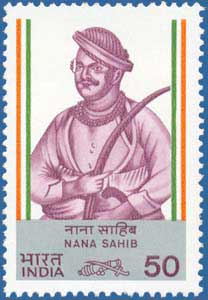
The trouble with discussions of the rights and (multiple) wrongs of the Empire Project is that the issues are seldom as ethically clear-cut as modern commentators would like and the details of particular events have often been lost or lack context. In many ways, works of fiction can raise these issues more easily than history books. In my case, Cawnpore describes the events of 1857 as seen by a European who was there but who was horrified by the actions of both sides. The reader sees things as my fictional narrator saw them and then has to draw their own conclusions as to where their sympathies lie.'

🐘⚔🐘


Would you like to know more?

Tom's blog, on which you can read more about 19th century history, about his other historical series, thoughts on writing, and much other assorted random stuff!

Tom's Facebook Page

Follow Tom on Twitter

Tom's Books on Amazon UK


Monday, 5 July 2021

THE WHITE RAJAH by Tom Williams @TomCW99 #RBRT #TuesdayBookBlog

5 out of 5 stars


On Amazon UK
On Amazon.com
On Goodreads


How I discovered this book: it was submitted to Rosie's Book Review Team, of which I am a member, though I'd bought it anyway.

In a Nutshell:  the story of James Brooke, who became the ruler of Sarawak in Borneo, in the 19th Century.

I read the third in this series (the Williamson papers), Back Home, five years ago, and adored it - they're all stand alones.  I read Book #2, Cawnpore, shortly afterwards, liked it but in a 4* rather than a '5* OMG' way, and never got round to reading The White Rajah. Then I watched the film Edge of the World, starring Jonathan Rhys Meyers as James Brooke, and thought, I know of a book about this...

In short, it's a fair bit different from the film, in that it's written from the fictional John Williamson's point of view - he is cast as an interpreter who went with Brooke to Borneo.  However, I recognised the atmosphere and the chain of events, but even if I hadn't, I thoroughly enjoyed this book - and apparently it is far more historically accurate than the film!  Tom Williams is a fine writer and a most engaging storyteller, his style perfect for the time period, and I was engrossed from the first page.  His characterisation is subtle and clever, and the narrative is not without humour (the earlier Governor of Sarawak's military strategy).

I loved reading about the different tribes in their long huts and the traditions; I would have liked to read more about them.  Of course, the attitudes of the British men are of the time, and at first they see it as their God-given right - nay, duty - to bring 'civilisation' to the natives, though there is a rather nice passage in which Williamson observes a tribe and considers that they seem quite happy and efficient as they are, thank you very much.  About the Dyaks: 'These were a people who knew not the poorhouse nor the lockup, whose lives were not blighted by working in great factories.  They knew nothing of steam locomotives or spinning machines but led a simple life at one with nature.'  

Highly recommended:  'A tale of adventure set against the background of a jungle world of extraordinary beauty and terrible savagery'.


Friday, 12 January 2018

BURKE IN THE LAND OF SILVER by Tom Williams @TomCW99

4 out of 5 stars

On Amazon UK
On Amazon.com
On Goodreads

How I discovered this book:  I was sent a review request and an ARC by the author.  I accepted because I have read other books by him, Back Home, one of my favourite books of 2016, and its prequel, Cawnpore.

Genre: early 19th century historical miliary/espionage adventure.  Although a work of fiction, some characters and events are taken from real life; there is explanation of this at both the beginning and the end of the book.

The 'land of silver' in the title refers to Argentina.  James Burke is sent by the War Office to Argentina, where he must assume various identities to forward British interests; like the Argentinians, Britain is against its rule by Spain.  Ultimately, he must assess the feasibility of British invasion.  Taking his trusty servant, William Brown, he sails with Irish merchant O'Gorman.  I enjoyed Burke's first impressions of South America, how he was astounded by its sheer size. 

Once established, Burke mingles with Society and starts an affair with O'Gorman's beautiful wife, Ana, whilst William assumes the persona of a hard-drinking rogue and rebel in order to infiltrate the lower echelons and discover plans for rebellion again the Spanish.  Burke himself takes on many guises in his quest for intelligence, and tussles with his rival, the Frenchman de Liniers.

It is clear that Tom Williams has a great love for his setting, and knows much about its history.  I loved the descriptions of rural Argentina and Chile, and the pictures were painted with so much detail that I found fascinating, even down to how the cattlemen would catch and prepare a beast for eating, or how the men survived the long trek to, and up and down, Chile.  My knowledge of this place and era of history is sparse, and this book taught me a lot.   The story is well structured, the plot successfully intricate, and if Burke and William's escapades ran a little too smoothly at times, they worked well within the context of the story.

This first Burke adventure is certainly plot rather than character driven; although some of the smaller players, like O'Gorman and rancher Paco Iglesias, came alive immediately, I only experienced the occasional glimpse of who James Burke actually was.  Maybe because the narrative was in the form of an omniscient narrator who had a similar 'voice' to Burke, I didn't see inside the characters' heads.  I never had a feeling of who William was, either, aside from a loyal servant, and his dialogue sometimes seemed to come from someone higher up the social scale.

As for Ana, we are told she is enigmatic and beautiful, and that she and Burke are having a passionate affair, but I felt little passion between them.  The most telling point of their relationship was when she said, 'You're a soldier.  You're back because your duty has brought you back.  And when your duty calls you away, you will depart.  And I will be left here alone.'  Burke's reasons for this were always warranted, but the little I did know of him I didn't particularly warm to, not least of all his disappointment that Chile was not European enough.

Having said all that, books of this genre tend to concentrate on the action and history, and avid readers of them probably have different requirements from me.  I need to 'know' a character to care what happens to him (I wanted Paco the rancher to outwit the Spaniards, yet cared little about the fortunes of Burke), but that's just a personal preference; there is no doubt that the plot and military skirmishes are well-developed and artfully told, and both the historical element and the descriptive settings deserve applause; there was much I enjoyed.

To sum up, and to review objectively, I'd give this book a range of different star ratings for various aspects, so I think 4* is fair overall.  It's quite an achievement, and would appeal a great deal to anyone with interest in or experience of these countries, and to those who love historical and miliary action/adventure.

Thursday, 26 May 2016

CAWNPORE by Tom Williams

4.5 out of 5 stars

On Amazon UK HERE
On Amazon.com HERE
On Goodreads HERE


I bought this book as soon as I'd read the stand-alone sequel, Back Home.  In Cawnpore, India, John Williamson is employed as a Deputy Collector in the British governed town during the middle of the 19th century.  Not always comfortable in the role of a conqueror in a foreign country, he seeks his own amusement, and forms relationships outside the British community.

This is the story of the Indian Mutiny of 1857, and the build up and aftermath.  I knew next to nothing about this, and found it most interesting.  Tom Williams is a skilful writer, adept in both characterisation and story telling. I liked how Williamson was reminded that the British were the trespassers, and that the Indians' viewpoint was that they were taking back what was rightfully theirs; possibly the most profound moment in the book. The treatment of the British by the Indians might not have been honourable, but it was no less so than in any other war; however, the purpose of a book review is to comment on the readability of the book itself, not the activities of the characters, especially when the historical fiction is based on fact.

In early part of the book the author has portrayed so well the stiff formalities of the early Victorians.  As tension mounts, he doesn't favour any particular faction within the story, and the descriptions of the build up to the massacre are detailed and well thought out.  Sometimes I found the book a little long-winded, but not often; sometimes long-windedness is necessary in order to report all facts. 

Williamson disguises himself as an Indian to facilitate his ability to move between camps; at times I wondered if this was a little far-fetched, but then I read in the author's notes at the end that some British officers used such disguises successfully during the mutiny, so do please bear that in mind when reading.

On occasion I found the detail of his physical relationship with Mungo Buksh to be unnecessary, but that may be because I prefer my battle stories without the 'love interest'!  On the whole, this novel is all that historical fiction should be: absorbing, believable and educational.

Added extra!  Either before or after you've read this book, you might like to read this excellent article by Liz Lloyd on her 'Lost in the Past' blog, the tragic tale of the English ladies of Cawnpore ~ brings it home.  It's HERE


BACK HOME by Tom Williams reviewed HERE


Tuesday, 10 May 2016

BACK HOME by Tom Williams

5 out of 5 stars

Crime in Victorian London

On Amazon UK HERE
On Amazon.com HERE
On Goodreads HERE


Reviewed by me as a member of Rosie Amber's Book Review Team


I loved this book.  Although the third part of a trilogy, it is a complete stand-alone (I haven't read the other parts), with a two page preface that gives exactly the right information about what has happened before; this is so well written that I couldn't wait to get cracking on the main story.

Back Home is an excellent piece of intricately researched historical fiction, set in the mid 19th century, when affluent, middle class John Williamson returns home from thirty years in Borneo and India to find England a place that has gone through much change.  Circumstances take him to London, where he becomes involved with the murky, criminal side of life in order to rescue a friend from danger—and because he is being blackmailed.

I enjoyed every word of this novel.  It's so cleverly written, with low-key humour in parts, the research used subtly and inobtrusively.  Williamson's new life centres around an underground industry; the detail about this is fascinating, as are the eye-opening accounts of life in early Victorian slums.  That aside, I loved reading about his impressions of this new London, his observations about the sociological changes and patterns, and the people he meets.  Even the mundane domestic detail held my attention a hundred per cent.

I shall be reading the previous book, Cawnpore, very soon (I've just bought it), and highly recommend this novel to all lovers of intelligent historical fiction.  Really impressed!