Showing posts with label Judith Barrow. Show all posts

Saturday, 28 December 2024

My Top Fifteen Books of 2024


  It's that time again...

I intended to do a Top Ten, but as usual when making my list it grew too long - you know how it is!  The books I've chosen were not necessarily published in 2024, but I read them this year.  If any of them pique your interest, please click the title for my review and universal links to Amazon and Goodreads.

I've listed them in the order I read them, aside from the last five, to which I awarded my rare and very special 5 Gold Stars.😊  I hope you see something that appeals, as I highly recommend them all!


The Drau River Flows to Siberia: The Victims of Victory

by Marina Osipova

The story of two people who survived Stalin's Siberian gulags, and the fate of the Cossacks under the care of the Allies in WWII.


I, Richard Plantagenet : Book 2 Loyaulte Me Lie 

by J P Reedman

The later life of Richard III


Hard to Forgive 

by Georgia Rose

Third book in the 'A Shade Darker' series.  A woman alone, a life lived in obsession and regret...


Pride & Pestilence 

by Carol Hedges

Book 11 of the Victorian Detectives murder mystery series


Live and Let 

by Judith Barrow

A short, amusing memoir, much of it about holiday lets.


Psittacide 

by Zeb Haradon

The crazy political arena of 2172, Book 2 in the Disposable Soma series


A Boundary of Stones 

by Millie Thom

The story of Eyam, the Derbyshire village that famously isolated itself during the 17th Century bubonic plague, stopping it from spreading to neighbouring villages.


Local Gods 

by Mark Hurst

An assassin who needs to lie low discovers strange happenings in the village of Little Baddington...


Operation Tulip 

by Deborah Swift

Working for the resistance in Nazi occupied Holland, 1944


The Queen's Avenger 

by Anna Legat

The story of a monk who supported Mary, Queen of Scots, through all she suffered.


*

5 GOLD Stars

All Quiet on the Western Front 

by Erich Maria Remarque

A young German man's experiences in World War I  


A Matter of Time 

by Judith Arnopp

The life of Henry VIII in his own words, from the Anne of Cleves era until his death.


The Swan Maiden 

by Gemma Lawrence

Book 2 of The Surface and the Deep, the story of Anne of Cleves.


Moments of Consequence 

by Thorne Moore

Short stories, dark themes.  Mostly.


Size Always Matters 

by Sally Cronin

Comprehensive guide to weight loss, exercise, nutrition and so much more.


Monday, 2 December 2024

THE STRANGER IN MY HOUSE by Judith Barrow

4.5 out of 5 stars


How I discovered this book: I've read and enjoyed quite a few by this author

In a Nutshell: Complex family drama

The Stranger in my House begins in the 1960s, in what I assume is a fictional village somewhere between Yorkshire and Lancashire.  Eight-year-old twins Charlie and Chloe are still mourning the loss of their mother, three years before, when father Graham brings home his new girlfriend, Lynne, who is soon to become his wife.  Charlie has reason to dislike and distrust Lynne from the start, because of a memory that Chloe doesn't share with him; however, Chloe soon finds her own reasons.

Along with Lynne come her children: the kind and supportive teenage daughter Evie, and Saul, an apprentice thug a few years older than the twins.  The problems begin immediately, and only escalate.

Part Two of the story takes place after a time jump of a few years, showing the effects of the marriage on all of them.  

I found this book hard to put down, reading it in the early hours when I should have been sleeping!  My initial feelings towards the Collins twins and their father were great sympathy and frustration at the lack of communication, at Graham's inability to stand up for what he knew was right, though this is in no way a criticism; rather the opposite.  Graham's lack of assertiveness and desperation to keep the peace was understandable because of all he had been through, and the twins were but children.  Also, this was another world; sixty years ago, values and attitudes were so different from now.  The family's inability to resolve their situation was what made the book so real, and such a 'page turner' - I completely believed in the characters.

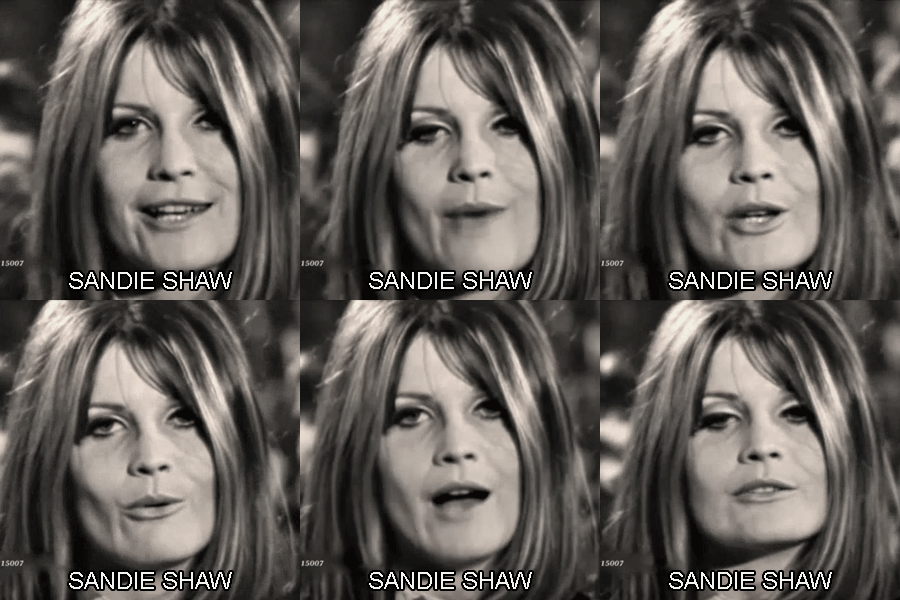
The (probably) psychopathic Lynne was so well drawn, and for me the whole story highlighted something that so many of us suffer from: the mistaken belief that others are basically honest and well-intentioned.  Oh, and something else I loved - how Chloe, when a child, used to write letters to Sandie Shaw, her heroine.  She never sent them, but imagined the singer reading them, which helped her pour out her thoughts.  I loved Sandie Shaw when I was a child in the 60s, and can imagine myself doing similar.  Well done, Judith B! 

THIS LINK will take you to the song that Chloe and her family loved so much - Always Something There to Remind Me 😀


Monday, 6 May 2024

LIVE AND LET by Judith Barrow @judithbarrow77

5 out of 5 stars


On Amazon (universal link)
On Goodreads


How I discovered this book: I know the author, saw this advertised on Twitter

In a Nutshell: A short memoir, mostly to do with holiday lets.

I loved this, thoroughly enjoyed reading it!  The main part of the book is a collection of the author's experiences with some of the people who've rented her holiday flat over the years - very funny, often so strange (and unexpected!) that if they were fiction you'd say they were too far-fetched.  But there's nowt as queer as folk, as I am sure Judith and her husband would agree (and yes, my guess is that Party Guy wasn't actually a vicar at all...).

To give the book more context, Judith has written a short autobiography, that explains why and how they came to live in Pembrokeshire and turn part of their house into a holiday let.  Then there are the strange comments left in the visitor's book, the poignant tale of Auntie Olive, and a short story with a most effective and unexpected end.

This is a lovely little book to which I was glued all the way through, immersed in Judith's world - it took me one and a half hours to read, and is currently on sale at just 99p/$1.25.  Worth under a quid of anyone's money!


Sunday, 22 January 2023

SISTERS by Judith Barrow #TuesdayBookBlog @JudithBarrow77

 4 out of 5 stars


On Amazon (universal link)
On Goodreads


How I discovered this book: have enjoyed a few by the author in the past, and saw her talking about it on Twitter :)

In a Nutshell: Family drama set in northern England and Wales in the 70s.

I was immediately engrossed in the premise of this book - in 1970, sisters Mandy and Angela are forever torn apart by a tragic event that changes the entire dynamic of their family life forever, and for which there is no fix.  The question of fault and blame encircles all of them - a tangle of smoke and mirrors, deals made, emotions never voiced, that will imprison the players in anguish for many years; the truths are as painful as any of the lies told.  Angela decides on a course of action that she will regret deeply in years to come, while Mandy takes a safer path.

The first part of this book, in particular, is so well drawn, and illustrates the time in which it was set so well.  It's not the music or the mentions of platform shoes, but the attitudes of the working people, their prejudices and delight in pointing a finger.  I thought Mandy's experiences at school were so realistic.

As the story carries on the true antagonist emerges; the plot is skillfully put together, with developments I did not foresee, as the two young women move forward in their vastly different lives. I felt that a lot of emotion went into the writing of this story and it weeps out of the pages, it really does.

On occasion I would have liked a bit more detail about some areas/periods that were covered quickly, but on the whole it's a very well-structured novel.  If you like down-to-earth family dramas, you will love this!


Friday, 26 February 2021

THE HEART STONE by Judith Barrow

5 out of 5 stars


On Amazon UK
On Amazon.com
On Goodreads


How I discovered this book
: I've read most of the author's other books, and was looking forward to this one.

In a Nutshell: Family/romantic drama set during World War I.

Jessie: sixteen years old, with a revolting stepfather and the boy she loves going off to war ... the stage is set.  I was thoroughly engrossed in this book all the way through, looking forward to getting back to it each time.  The aforementioned revolting stepfather, Amos Morgan, was so despicable that I was hoping for his comeuppance all the way through the first section of the book, and don't get me started on Bob Clegg....

What struck me most, throughout, was how hard life was for women in those times.  I questioned, now and again, why Jessie put up with all that she did, but you can't judge a woman of the second decade of the 20th century by even the standards of a woman, say, in the 1950s.  Especially not one who is poor, and not that well educated.  Then there's the First World War propaganda that sent all those young men off to almost certain death, and made them feel guilty when they didn't want to go—one of the biggest crimes against humanity in history.  Not to mention the fate of deserters. Words fail me.

My favourite characters were Clara, Jessie's educated, progressive friend, and Arthur, Jessie's love who went to war.  The chapters written in his point of view were stunningly good; Ms Barrow portrayed his haunted, disturbed mind so well. Although her main characters are usually female, it's her male characters that are often the most memorable—Bob Clegg's dialogue was masterful.  

This is definitely my favourite, all round, of all the books by Judith Barrow that I've read.  Previously, my favourite was A Hundred Tiny Threads, which tells me I like her historical fiction the most.  I think it's because her settings and characters are all northern working class of the, 'aye, love, I'll put the kettle on when you've filled the coal scuttle and boiled the cabbage for our tea, and that Ada Bloggs over t'road is no better than she ought to be' type, which I find slightly depressing in more modern times, but, pre-World War II, it's far enough away not to be so!

As with most books there were odd occasions when I was a little frustrated by a development, but much of this is just personal taste—if domestic wartime dramas are your thing, I guarantee that you will love this book!


Saturday, 25 April 2020

THE MEMORY by Judith Barrow

4 out of 5 stars

On Amazon UK
On Amazon.com
On Goodreads


How I discovered this book: I've read all of Judith Barrow's books, so I bought this as soon as it came out.

In a Nutshell: Intense family drama dealing with Down's Syndrome, bereavement and dementia.

I liked the structure of this book a lot - it's written in the first person, and each chapter starts with a small section in the present day (2002), with Irene, the main character, taking care of her mother, who has dementia.  Then it goes back in time, starting in 1963 when she was a child, and her sister, Rose, who has Down's Syndrome, is born.  I really loved the first third, which detailed Irene's love for her sister (quite beautiful) and the difficulties within the family, with her cold, brusque mother, delightful father and the grandmother she adored.  I was completely absorbed.  The rest of the story pivots around a shocking event that takes place at around 40%.

The book slowed down for me a little during the middle section, which was about Irene's growing up and the early part of her marriage to Sam, and I found the family's lives rather depressing (which is a bit rich coming from someone who writes about dystopian horrors, but I find the end of the world as we know it less depressing than a humdrum life.  I know, I'm weird).  In the final third developments became much more interesting, and I was engrossed once more.  I would have liked a little more in the way of plot, but that's just personal taste, not a criticism; this is a character rather than a plot-driven book.

The strongest aspect of the latter part of the book was the initial development of the mother's dementia; I have experience of this with my late mother, and, although the circumstances were very different, it certainly struck a chord, with one particular episode bringing tears to my eyes.

My favourite characters were Irene's father and her husband, Sam, who I thought got a bit of a raw deal and put up with too much (I do hope he had more fun than he admitted to Irene, during a time when circumstances forced them apart).  I can't say I liked Irene, who put her own obsession with the past before his happiness, and whose outlook often seemed rather narrow (I kept wanting to tell her to lighten up, and do something a bit crazy!), but I appreciated how deeply and lastingly she was affected by the aforementioned shocking event, and she's a thoroughly three-dimensional character.

The other star of the book is the time and place—the working class northern England of the 1960s and 70s, which was as starkly and realistically portrayed as any TV kitchen sink drama.

The ending brings a most surprising twist directly related to the events of Irene's earlier years, which filled me with regret on her behalf.  If you enjoy emotional family dramas that dig deep into the psyche, you will love this book, with its vivid descriptions of familial conflict, loss and the day to day difficulties of caring for a person with dementia.


Tuesday, 22 August 2017

A HUNDRED TINY THREADS by Judith Barrow @barrow_judith

4.5 out of 5 stars

On Amazon UK
On Amazon.com
On Goodreads

How I discovered this book:  I'd read the rest of this series and was looking forward to this prequel.  I highly recommend the short stories attached to the series, Secrets.

This is the fourth book in the Pattern of Shadows series, though in some ways the first, because it's the prequel to the others, which are set in the 1940s, 50s and 60s.  I'd recommend reading it first, anyway.  It spans the years 1911 to 1923, and tells the story of earlier members of the Howarth family.

So, there was me thinking this was going to be an 'eh-up, love, put the kettle on' family drama amongst the cobbles, with a bit of WW1 angst thrown in.  I was wrong; it's so much more than that, and far more interesting.  The book starts with Winifred Duffy, daughter of 'orrible Ethel, joining up with some enchanting Irish scallywags with irritating dialogue tics who are involved in the fight for the women's vote.  The story was jogging along in a modest fashion, until (enter stage left) along came Winifred's grandmother, Florence, who I loved, and whose story was heartbreaking.  A moment later I was reintroduced to Bill Howarth (Mr Prologue), a thoroughly unlikeable character who grew increasingly despicable, and all of a sudden I realised I was engrossed.  I do love a well-written nasty piece of work, and Judith Barrow has done a masterful job with Howarth.  He'd had a bad start in life, yes, but I didn't pity him; my loathing of him grew more intense as the book progressed.

The saga moves through the treatment of the suffragettes, lost love, unwanted pregnancy, dark family secrets, the evil, pointless horror of WW1, the general godawful fate of the impoverished classes, the 1919 influenza epidemic, the atrocities committed by the Black and Tans ~ this is no rose-tinted piece of nostalgia, and no detail is spared.  Saddest of all is the life of Winifred, in many ways; although she finds some degrees of happiness, the theme all the way through seemed to be how women of the time had to put up and shut up, and accept what they got, even if it was so much less than they deserved.  This aspect of the book is so well done, without being hammered home.  I was pleased that, although there was resolution, there was no great happy ending.  100 Tiny Threads is about real life, and quite an eye-opener it is too; it made me glad I wasn't born fifty years earlier, for sure.

When I got to the end, I wanted to nip back to Pattern of Shadows, set in WW2, to find out what happened to Bill and Winifred; it's two or three years since I read it, and I can't remember.  D'you know, I think I will.

Thursday, 22 June 2017

SECRETS by Judith Barrow @barrow_judith

4.5 out of 5 stars

On Amazon UK
On Amazon.com

How I discovered this book: I've read the three books in Judith Barrow's Howarth family saga, so was interested to read this offshoot collection of short stories. **Only 99p**

I read the whole collection this afternoon, and really enjoyed them.  Each story deals with a character who has a secret; the first few are quite short, the longer, more involved ones nearer the end.  I recognised some of the names from the series, but it wouldn't matter if I had or not; they're all terrific stories in their own right.  The best ones are, I think, Alun Thomas and Stan Green's secrets, both of which are heartrending and take place during the First World War; I imagine I will meet these two when I read the prequel to the trilogy, which is out this summer. 

What the characters have in common is their social class, and the book is a great illustration of how some situations caused great trauma for the subject, yet wouldn't matter at all today, or even occur; a boy of fourteen lies about his age and signs up to fight in the war, a girl survives a mother and baby home where the children are taken away for adoption, a battered wife has no choice but to stay with her husband.  The characterisation is spot on, all the way through.

Judith Barrow has done a great job of ending some stories with dangling threads, leaving you dying to know what happens next ~ thus, the outtake short story collection for a series.  It certainly worked for me!  But they stand up perfectly well on their own.   I definitely recommend them for a great couple of hour's reading.

Tuesday, 5 July 2016

SILENT TRAUMA by Judith Barrow

4.5 out of 5 stars

On Amazon.com HERE
On Amazon UK HERE
On Goodreads HERE


'The story is fictional, the drug was real'

Judith Barrow wrote this book to bring attention to the trauma sufferered by the victims of the drug Diethylstilboestrol (DES), given to women between the years 1949 and 1971.  It was prescribed to prevent miscarriage, but had a devastating effect on the daughters - and possibly the granddaughters - of the women who took it, meaning that they had miscarriages, too, cancers of the reproductive organs usually associated with older women, and other problems to do with that part of the body.  Unlike with Thalidomide there has been very little publicity about it, and the women who campaigned for what they had been through and why to be recognised, faced many brick walls.

I think writing a novel about it is such a good way of letting people know about the ongoing tragedy; I would not read an article about it, but I read this.  Silent Trauma follows the lives of four women affected by the drug, and the friendship that forms between them: Meg, whose daughter Lisa took her own life; Rachel, whose husband left her because of the change in their marriage due to her depression caused by several miscarriages; Avril, a recluse whose life was shattered by cancer in her teens; and Jackie, caught in a difficult and violent relationship with a woman, herself a product of a difficult upbringing.  

Aside from the main purpose of the book, I enjoyed reading about the four women very much; it's a well written, well planned story.  The characterisation is terrific, and the situations so real.  I've read Judith Barrow's nostalgia orientated, warts and all family sagas set in the north of England during the 40s, 50s and 60s, but actually liked this more.  I read it in one sitting.  Speaking as one who has never had the urge to have children I cannot imagine how it must feel to want them so badly that you feel like less than a woman if you can't reproduce, but all the emotions were painted so vividly that I felt everything the characters went through, and the situations were met with great understanding and sensitivity.

Jolly well done :)


Saturday, 29 August 2015

LIVING IN THE SHADOWS by Judith Barrow

4 out of 5 stars

1960s family drama, 3rd part of a trilogy

On Amazon UK HERE
On Amazon.com HERE


I was looking forward to reading the third part of Judith Barrow's warts-and-all saga about the working class Howarth/Booth/Schorrman family living in Wales and northern England.  The first part took place in WW2, the second in 1950, and Living in the Shadows takes us into the next generation, in the late 1960s.

These books are very much an every day story of ordinary people, a bit like listening to The Archers or watching Emmerdale Farm before it lost its 'Farm'; I'm sure someone makes someone else a cup of tea every ten pages!  They will hold a great nostalgic appeal for those who have lived through these times in similar circumstances, which explains their popularity.  But they're more than just a real life drama; Judith Barrow has a clever and subtle way of showing the attitudes of the time amongst Mr and Mrs Average, rather than giving them a gloss, like a nostalgia programme on TV; this, for me, is their greatest strength.


So, the 1960s... it wasn't all free love, Union Jack minis and Twiggy; the atmosphere of the war years of the 1940s and the struggle back in the 1950s prevailed.  The extended family in this book come face to the face with scenarios of the type that were brushed under the carpet fifty years ago, ie, homosexuality and domestic violence.   The storyline I found the most interesting was that of eighteen year old Victoria, who experienced the sinister side of the hippie movement; it shows how young people, eager to take on new trends, can be manipulated and taken advantage of.  Oddly enough, I had only recently watched a few TV programmes about Charles Manson and his strange commune of brainwashed young women; Victoria's tale rang all too true.


As for the older members of the family, the loss of one of them near the end made me feel very sad, even bringing a tear or two to my eye; this bit was very well written indeed.  I suspect this is not the last we shall see of this family!


PATTERN OF SHADOWS by Judith Barrow reviewed HERE


CHANGING PATTERNS by Judith Barrow reviewed HERE


Sunday, 26 April 2015

CHANGING PATTERNS by Judith Barrow

4.5 out of 5 stars

1950s family drama

On Amazon UK HERE
On Amazon.com HERE


Now, this is what I love to see ~ a sequel that is better than the first!  Ideally, writers should improve on their craft all the time, even if they do so without realising; I've read a few books from series this year and been pleased to find this the case, every time, and particularly so with this novel.

Pattern of Shadows followed the fortunes of the Howarth family in working class northern England during WWII; Changing Patterns takes the story into 1950.  I read this book over a period of about 48 hours and thought about it when I wasn't reading it.  What made it good?  It's easy to read, a bit like watching a soap opera; yes, it's an everyday story of simple folk.  Its main USP, though, is the realism, which made me feel two different things.  Firstly, a comfortable nostalgia; I was not born until 1959, but know that people of my parents' generation see those post war years as something of a golden age.  You know, when people had proper family values and were so grateful just to live in a time of peace that they were more appreciative of seemingly trivial pleasures.  The other side, though, is somewhat darker: the prejudices, particularly amongst the ill educated, and the sense of being in a social straitjacket.  This book portrays both sides so well.  

In the first book I did not warm to the main character, Mary Howarth, but I came to like her much more in this one, along with ex POW, Peter, and Mary's sister, Ellen.  Oh, and the horrors of living with the battleaxe mothers in law!  The book is sometimes very graphic in its realism and made me extremely glad the stork didn't drop me in Ellen's situation; Mrs Booth was quite revolting.  And then there is the gross and despicable George Shuttleworth...
I'd say that if this sort of family drama is your favourite thing to read, you will love this book; it's very well written and is a fine example of the genre.  I shall definitely be reading part 3 when available; it's about the next generation and is set in the 1960s.  I so look forward to Ms Barrow's take on an era I really do remember.

A note to the proofreader: at 66% Ms Barrow has used the word 'scran', which is northern slang word for food.  "Good scran that, our kid,".  Alas, the proofreader/editor has changed it to 'scram'!  This made me laugh, as I am a southerner who has moved to the north east in recent years, and before that I hadn't heard of the word, either.  There - you learn something new every day, indeed!


PATTERN OF SHADOWS by Judith Barrow reviewed HERE


LIVING IN THE SHADOWS by Judith Barrow reviewed HERE


Tuesday, 23 December 2014

PATTERN OF SHADOWS by Judith Barrow

4 out of 5 stars

WWII family drama


On Amazon UK HERE
On Amazon.com HERE


If you like family sagas and wartime drama I'd recommend this book. Pattern of Shadows paints a marvellously realistic picture of a working class family of the time, and makes the reader aware how much attitudes and expectations have moved on in the subsequent seventy years. Homophobia, xenophobia, misogyny, violence, rigid prejudices, it's all there! It's obviously very, very well researched, which I always appreciate in a novel of this type.

There are many different story lines as the Howarth family meet with one difficulty after another. I didn't warm to the main character, Mary, who seemed rather frosty and humourless, but she was a woman of her time and situation; I imagine under her circumstances I might have been frosty and humourless too! The story really brought home how dreadfully limiting life was for women in such communities in those days.

Some of the characters were very well drawn; I particularly liked the penultimate chapter with 'orrible Arthur in the pub. At around 93% there was a bit that brought a tear to my eye, an indication of the isolation of old people living alone. I wanted to go round and take Mrs Jagger a cake!

I found some of the dialogue slightly wooden at first, with a little too much exposition, though it soon warmed up and the author's writing style seemed to 'kick in' properly around chapter four. I thought the ending (the last couple of chapters) were very satisfactory - the ending of a novel is so important to me. It was nicely wrapped up but still leaving a little doubt, and questions to be answered in the sequel, which I shall be reading at some point because I want to know what happens next. Which is what it's all about, really, isn't it?


CHANGING PATTERNS by Judith Barrow reviewed HERE


LIVING IN THE SHADOWS by Judith Barrow reviewed HERE