Showing posts with label dystopian books. Show all posts

Monday, 20 April 2026

THE SIGNAL by Luke Voss #RBRT

 5 out of 5 stars


On Amazon (universal link)
On Goodreads


How I discovered this book: it was submitted to Rosie's Book Review Team, of which I am a member.

In a Nutshell: The sinister reality of 'collaborating' with AI in the workplace...

This is such a good book. It's well written, the characters clearly defined, the plot intricate and convincing, and Luke Voss clearly knows his subject inside out, and uses some nice turns of phrase. 

At a company called Nexus Technologies, workers are being 'transitioned', as their roles are taken over by the AI system, ARIA.  It's been introduced gradually, stealthily, so at first the staff believe that ARIA will be used in a 'collaborative' sense, as a tool to help them.  The myth is that it will take over time-consuming tasks, in order that the human workforce may have more time to be creative, to use their individual skills.  Over time, though, ARIA's ever-expanding capabilities means these skills are becoming surplus to requirements.

Some customers, for whom those in Maya Chen's department create publicity and marketing strategies, believe that they are corresponding with human beings, when actually they're talking to AI.

Sound familiar?  We all know how frustrating it is to contact 'customer services' departments, only to find that it is impossible to either email, message or speak to an actual person.  This book is like a warning from the very near future, in which workers lives, education, experience and service to a company no longer matter, because AI can do it better.  Or can it?  This is what Maya and her former colleagues Marcus and Donna are determined to address.

As well as the replacement, The Signal shows how difficult (though not impossible) it is to maintain contact with anyone outside one's own home, without AI knowing all about it.  How everything we do online is tracked and stored.  How the only way to have a truly private conversation is face to face - that's if you can arrange it in the first place, without giving away your location.

As a thriller it's low-key, with a lot of technical information - however, this is necessary, as it is the author's knowledge of his subject that makes the story believable.

I look forward to what comes next!


Monday, 3 March 2025

ADVENT OF LIBRA by Chris Wimpress #RBRT


3.5 out of 5 stars


How I discovered this book: it was submitted to Rosie's Book Review Team, of which I am a member.

In a Nutshell: A dystopian future UK

This book opens in an undetermined time in the near future of this country, I think about 10 or 15 years hence, and introduces us to three generations of a dysfunctional family around whom it is based.  Grandmother Stella is in a care home, her daughter Kelly a divorced, alcoholic therapist who relaxes by vaping skunk.  Kelly's niece Lara is secretly involved with a group of dangerous insurgents.

This group is called Libra, weaponised entitled youth who blame the older generations for every ill in their lives and feel it is their right to 'snuff' the 'stiffs', in other words terrorise towns, set light to care homes and murder the 'boomers' who apparently have no right to live their lives out in peace and comfort.  A particularly nasty piece of work called Alyssa is under the impression that they're 'living off her taxes'.

Some parts of this novel reflect the current times, with the media failing to report incidents that don't reflect the narrative the government want to promote, and Kelly's belief that the use of facial recognition technology is there to 'keep them safe'.  Much in the imagined future is feasible indeed - failing businesses, night time curfews - but I couldn't quite buy into the whole Libra idea; they didn't seem to have much agenda apart from mayhem and murder.  Where did they get sufficient weaponry to gain victory over the entire army and police force?  Who was funding them?  I felt that there were large gaps in the world-building; groups of insurgents generally have a few billionaires with their own agenda to back them.  There was, for instance, no indication of exactly how they managed to blow up the massive Tyne Bridge.  We were just told that they had.  And aside from the police and army, people themselves tend to form into groups and fight back.

The book could do with a better proofread, though I did enjoy reading it and there was interesting detail about Stella, Kelly and Lara's past, but I just couldn't quite believe in it.  Then again, many variations on our inevitable dystopian future are being written these days, and feasibility is always subjective.  


Monday, 12 June 2023

SILO by Hugh Howey

 4.5 out of 5 stars


On Amazon (universal link)
On Goodreads


How I discovered this book: Started watching Apple TV series, sought out the book.

In a Nutshell: 'In a ruined and hostile landscape, in a future few have been unlucky enough to survive, a community exists in a giant underground silo.

Inside, men and women live an enclosed life full of rules and regulations, of secrets and lies.'

As is usual, the actual story differs a fair bit from what I've seen of the TV series so far - only 3 episodes, though, so I'm reserving judgement.  This first installment was originally called 'Wool', and I still don't know why, unless it refers to the stuff that gets pulled over one's eyes.

The book opens with characters who are not seen again once their stories have been dispensed with, leaving a slowly unfurling chaos in their wake - probably, according to 'the rules' of novel writing, a total no-no, but it really worked for this.  The protagonist for the rest of the novel is engineer Juliette Nichols, who works in the 'deep down', keeping the machines running.  As often happens with men writing female main characters, she's a man in all but name, but that didn't matter too much, because I liked her well enough so could suspend any disbelief; also, her backstory provides reasons for her somewhat hamstrung emotions.  The most vivid characters for me were Walk, an elderly technician, Lukas, who studies the stars., and Jahns, the mayor when the story opens.

The theme of the story, throughout, is the growing sense that the inhabitants of the silo are being lied to about why they are there, what happened to humanity before the silos existed and what's really outside, and that's just for starters.  A few who know more are keen to make sure that truths remain hidden; investigating too deeply can be dangerous.

It's good.  I remained interested throughout and loved the concept of one's whole life being governed by one's place on that never-ending staircase from top to bottom.  Look forward to seeing what happens next.


Sunday, 4 December 2022

CROW COUNTRY by Emily Sullivan

 4 out of 5 stars


On Amazon (universal link)
On Goodreads


How I discovered this book: freebooksy

In a Nutshell: Bleak post-apocalyptic world in which men are mean and crows are ... huge.

“Everyone was, in one night, made basic again. For when the Lord snapped his fingers, the Devil took the stage. What tremendous music he made”.

A strange book ... highly atmospheric, and that was what kept me reading.  That and wanting to know if the main character, Judge, would make it.

It's almost three decades after some event that caused a blackout across America, a situation never reversed.  Alas, we never find out what happened on October 9th, nearly thirty years before, or why fertility has been affected.  This isn't really a criticism as the book is about the events of the present; I just like to know the full story!  Judge lives in Colorado, in the new town of Genesis, run by a man known only as Law (at first).  Gradually, little bits of information are dropped in to show the reader details about the past.  I liked the way this is done, as by the time this appeared I really needed to know what the backstory between Law and Judge was.

As well as dealing with the usual horrors of a post-apocalyptic world, the inhabitants of Genesis must take cover from the crows, grown huge and predatory.

I found the writing style compelling (in that I couldn't have not read until the end) yet frustrating at times, when something was not explained as much as I would like; at other times, though, this was most effective.  Occasionally there were odd word choices, unusual ways of describing a feeling, the weather, the atmosphere that mostly worked very well but now and again had me thinking, what does she mean?  I noted afterwards that the author writes Westerns, and this book is very much in that vein.  It's raw, bleak, with little comfort for the characters and a dark portrayal of the worst in man.

I liked it.  It's good.  Now I want to read a prequel!


Sunday, 31 July 2022

CONVERSION: THE FALL #1 by ST Campitelli @stcampitelli #TuesdayBookBlog

 4 out of 5 stars


On Amazon (universal link)
On Goodreads


How I discovered this book: Twitter

In a Nutshell: Post-apocalyptic thriller set in Australia

The story begins a couple of years after 'The Fall', when Australia is already divided into warring factions - the well-defended 'wallcoms' - communities in which people can live a life that resembles the 'before', and those who have chosen to live outside the relatively safe walls.  Many of the original wallcoms have now fallen, overrun by the infected, feral beings with white skin.  Once bitten, it's only a matter of time before you become a 'jack'.

Then there is the Headhunter - the standard post-apoc psycho baddie.  A trope that never gets old - every book of this genre needs at least one!

The author concentrates on several main characters, each one of whom tells the story from their POV, always in the third person.  John Bradley is a regular guy who goes out with the scavenging teams, though wife Helen wishes he would choose a safer occupation.  Reading this, though, I couldn't help thinking that I'd want to do what John does, too, instead of hiding behind the walls in an illusion of safety.  The sense of adventure is full-on, with missions described in detail.  Anyone who has fantasies of living in a post-apoc world (that's me with my hand up) will be drawn to this.  

The book is plot- rather than character-driven, which meant that I sometimes had trouble remembering who everyone was, but the dialogue totally works and the writing is such that some characters were still three-dimensional to me: John, his mate Matt, rockers Skylar and Harley (loved them!), and the Headhunter.  I loved the inventive details about the technology, the spectacularly good world-building, and the chapters from the POV of the infected. 

Good stuff, post-apoc lovers.  Book #2 is also available, and I believe Book #3 is in progress.


Monday, 15 November 2021

CROMBY'S AXIOM by Gary J Kirchner #RBRT

4 out of 5 stars


On Amazon
On Goodreads


How I discovered this book: it was submitted to Rosie's Book Review Team, of which I am a member.

In a Nutshell: dystopian; battle against invasive technology.

There are so many good dystopian books around now, and I love reading the many, wildly different versions of what might await us in decades to come.  I enjoyed this, the debut novel by Gary J Kirchner.

In the future, the people are crowded together in cities and connected by the Hive mind; all thoughts are connected, all information just a micro-second away.  Tommy is a world famous athlete who finds himself lost in the 'Fallowlands' of Switzerland - and, worse than this, he has somehow become unconnected, as he discovers when he searches for the information he needs about where to go and what to do.  Eventually he meets up with members of the Ketchen: rebels who live outside the cities and the Hive mind.

The differences between life inside the Hive and the old world of the Ketchen give one a lot to think about, especially if one is of a certain age and grew up without the technology that exists now.  The sinister truth about Tommy's world unfolds gradually, and is no less shocking for being almost expected.  Several times, one of the people who controls Tommy offers some depressing reflections of our real world:

'...from the days of metal electronics and hand-held interfaces to skin graft technology and visual implants and finally to seamless thought communication, the same pattern was followed: technology is developed, a vanguard establishes its use, meek voices raise issues of privacy and ethics, which simply get swamped in the global rush to embrace this newest step...'

And about why the Ketchen are allowed to exist:

'It's healthy to have an enemy.  It brings people together... the idea that 'out there' are outlaws, bad guys who want to do your side in.  If the Ketchen didn't exist, we'd probably invent them'.

Tommy is a likable character and, despite my feeling that some of the explanations could have been edited down to be more reader-friendly, the story held my interest throughout.  The exciting events of the last ten per cent of the book, and the ultimate end, are particularly good.  I'd definitely like to read more books set in this world.


Monday, 8 November 2021

TRASHLANDS by Alison Stine @AlisonStine #TuesdayBookBlog

 5 out of 5 stars 


On Amazon
On Goodreads


How I discovered this book: I read about it on Kindig Blog HERE (thank you!)

In a Nutshell: Climate change/industrial pollution-orientated dystopian

Some decades from now (anything from 50 to 100 years' time, I believe), the earth has flooded, many flash fires have occurred, and waters are polluted by industrial waste and plastic.  Society as we know it has broken down, and new ones have emerged.  The currency for the poor is plastic - they 'pluck' it from the water and sell it for recycling into house bricks, which affords them a meagre, subsistence-level way of life.

Coral, Trillium and Mr Fall live in Scrappalachia, formerly without the 'Scr', a vast area of junkyard.  Their own corner is dominated by a strip club: Trashlands.  Meanwhile in the cities, the workers are a different sort of poor.  They live a hard life, too: a high rate of crime, queueing for food, and little in the way of comfort.

As often with this genre of book, what I was most interested in was the world-building.  At first there was frustratingly little, just a few snapshots showing how the current situation came to be, but it built up as the story went on with much more detail near the end, by which time it meant so much more than if I'd learned about it from the beginning; the narrative often divulged information in words left unsaid.  I liked how the fashion for names has changed; mostly, people are named for places, plants and animals that I imagine no longer exist: Tahiti, Miami, Foxglove, New Orleans, Mangrove, Golden Toad - and Coral.

There is no big apocalyptic happening but a slow deterioration of the world we know, starting with the floods.  This means, of course, that there is also a gradual deterioration in intellectual possibility and knowledge of the world, as the internet and TV no longer exist and most books have been destroyed; also, the people are more concerned with staying alive than being educated.  It's like a move back to medieval times, but with a polluted world rather than vast areas of lush green and clear water waiting to be utilised.

The story is told in medium length chapters from many points of view - Coral, her man Trillium and her 'father', Mr Fall; also Foxglove and Summer, 'dancers' at Trashlands, Rattlesnake Master who owns it, reporter Miami from the city, and a few others.  Always my favourite structure if done well, and this was.  The story itself centres around an event in Coral's earlier life, but the plot seemed like a backdrop for this detailed picture of our future world, rather than the opposite way round.

There were a couple of areas that I thought could have done with a bit more thinking through, like how the people of the junkyard would have been unable to work or survive on a diet of insects, weeds and the odd rat, and that petrol and diesel deteriorates in about a year at most, but every post-apocalyptic story I've ever watched or read ignores this second point; if it's good enough for The Walking Dead, I'll suspend my belief here too 😉.  To sum up, I was absorbed by this book all the way through, thought about it afterwards and would love to read more.  There: that should be all the recommendation you need!


Tuesday, 12 October 2021

LINE by Niall Bourke

4 out of 5 stars


On Amazon UK
On Amazon.com
On Goodreads


How I discovered this book: I read a review of it on Mairéad Hearne's blog, HERE

In a Nutshell: Dystopian. Speculative Fiction.  From the blurb - Line pushes the boundaries of speculative, high concept fiction. Deeply moving, it also touches on many of the pressing issues of our turbulent world: migration and the refugee crisis, big data and the erosion of democracy, climate change, colonialism, economic exploitation, social conformity and religious fanaticism

At some unspecified time in the future, Willard lives on the Line - a constantly moving tented community that stretches as far as the eye can see in either direction.  Line dwellers subsist on the bare essentials, their faith that what lies at the end is worthy waiting for, and the fear of consequences should they dare to leave; away from the Line there is nothing.  A failed attempt to escape means a fate worse than death, as is attempting to skip one's place.  It has existed for generations, and children know of the sacrifice made by their parents and their grandparents to afford them their current place.  Nobody knows why it began or where it goes, just that they are heading towards some better unknown.

I loved the first part, with a restless Willard questioning his life.  The writing was great, most absorbing; I was so impressed by the whole concept of the Line and looked forward to finding out how the people had been coerced into living according to its rules, believing in the myth of the end, and how the Line had developed its own code of law and become its own society.

Around half way through, we leave the Line and surrounding nothingness, and are presented with what feels like a different book, detailing the wider truths about the world.  Much of it appears in the form of a printed handbook, about the current economic situation, about technological progress and philosophy.  It's extremely dense and complex, and rather dull; you know when you read a text book because you need to learn about something, but the way in which it is written makes your brain shake its head and say, 'Nuh-uh, not storing all these words'?  That was how this was.  I kept trying to take it in but it didn't want to stay.  I felt as though the ideas had not been developed enough; the whole middle section about the new London seemed disjointed, and I just didn't buy it.

During the last one fifth of the book we come to the whys and hows of the Line: the psychology of how and why people queue and wait, of hope, faith, religion, generational beliefs passed down, of the vision behind the line and the whole truth about it—so up my street I welcomed it in with coffee and cake, and loved it all over again.  Fascinating.  The end was sad and bleak, but right for the story.  I like those sort of endings.

To sum up: a first class idea and I'm glad I read it, but I felt there needed to be more.  More background, more detail, more attention to 'readability', more character-based narrative and fewer pages out of the handbook.   And thanks again to Mairéad for introducing me to it :)


Monday, 9 August 2021

DEPARTURES by E J Wenstrom @EJWenstrom #RBRT

4 out of 5 stars


On Amazon UK
On Amazon.com
On Goodreads


How I discovered this book: it was submitted to Rosie's Book Review Team, of which I am a member.

In a Nutshell: YA dystopian, brainwashing, mind control.

I adored the premise of this book - it is set way into the future, after devastating wars, in a part of the world ruled by the 'Directorate'.  Here, citizens live in environmentally safe domes called Quads, where every aspect of their lives is observed, every move they make controlled by their governors.  

To an extent, I saw this situation as a clever take on a world that could be waiting for us: the mildest physical or mental ill health is to be feared, free speech is not an option and the primary objective is safety for all.  No risk taking, no individuality, no strong ideals to make a stand for.  It made me think of a video I saw recently, from the Academy of Ideas (see below; it's worth a watch!).  

In the Quads, extremes of emotion are not allowed, and grief is treated with medication - which brings me to the title of the book.  All citizens have their 'departure' (death) date tattooed on their arm.  Many will live for over a century, but others are allowed far less time on this earth. Evie doesn't know why she is to die at aged seventeen, but, as with every other custom in the Quads, the 'departure' procedure is presented as a kindness; the Directorate wishes to spare the individual any pain or discomfort.

Full compliance is essential; any diversion from the official line, from the prescribed behaviour, is not tolerated.  

'The Directorate would do whatever was necessary to placate its citizens.  There would be an explanation.  A distraction.  And then life would move forward.  A few might question it all for a bit, but the tug of a content, easy life would ultimately lull them back into line.  Because, I realise, here's the kicker: what most people want is not to trust their government.  It's not to build a better world.  All they want is to be comfortable ... and with a sickening twist to my stomach, I realise that I am one of them.'

The problem with Evie's departure ceremony is not only that she doesn't know why she must die when her life has hardly begun. Her departure doesn't happen as it should. She lives. She is one of the few for whom the euthanasia medication doesn't work.

The book alternates between the points of view of Evie, as she finds herself outside the Quads in a strange world that isn't supposed to exist, and her sister Gracelynn, who is confused, hurting over the loss of her sister, and beginning to wonder if their lives are based on lies.  The writing itself is clear and effective, and the compelling plot line flows along.  Evie and Gracelynn's discoveries come to light gradually, with truths unravelling at just the right pace.  

For the first half of the book, Evie and Gracelynn's personalities were well-defined, very different, but as the action ramps up they become more alike.  This novel is YA, not usually my genre of choice as I have not been a young adult for decades, but I couldn't resist the plot.  I felt this was right for the younger end of the YA range; I can imagine liking it when I was about fourteen but finding it a bit too simplistic when older.

I would have liked some sort of explanation about where in the world this was supposed to take place; as this is a couple of hundred years or more into the future, it could be that the author envisions a world in which the countries as we know them no longer exist - fair enough.  There is a little background information, but I would have liked more, and to know how large an area the Quads are supposed to cover, as well as how big they are - I couldn't imagine them.  The only other problems I had with it were a) overuse of the word 'goofy',  and b) the malfunctioning euthanasia process - even now, there exists the means to put people to death quickly and effectively, so it seems unlikely that in a couple of centuries' time they would still be making errors.  However, any books of this genre require some belief suspension here and there, and this didn't bother me too much.  Not as much as all the goofy grins, anyway, or 'Jeeze' being spelled 'Geez' (as an expression of annoyance, it's short for 'Jesus') - repetitions and misspellings are something we all do, but these should have been picked up by the editor.

Departures is a stand-alone, though I imagine there is more to come; I liked the rather uncertain ending (no spoilers!), particularly Gracelynn's outcome.  E J Wenstrom has created a spookily plausible future world, and I'd certainly be interested in seeing what happens next.


Why an Obsession with Safety creates Sick Minds and a Sick Society


Monday, 1 February 2021

TOKYO MAYDAY by Maison Urwin #RBRT

4.5 out of 5 stars


On Amazon UK
On Amazon.com
On Goodreads


How I discovered this book: it was submitted to Rosie's Book Review Team, of which I am a member. 

In A Nutshell: Dystopian future, England and Japan

'The human race.  Migrating here and there for centuries, back and forth, whilst objecting to the influx of others.  Like migrating birds.  Like herded sheep.'

I love to read other authors' view of the near future, and Tokyo Mayday is a clever and inventive slant on the subject.  In the 2050s, climate change, political/civil unrest and technological advancement have turned the US and the European states into third world countries, with poverty and lack of jobs.  The world's greatest superpower is now Japan.  Outside the cities, economic migrants are kept in holding camps, hoping for work, but now many of these migrants are white Europeans and Americans.  

Jordan May and his family are offered the chance to live in Tokyo, which means a good job for Jordan at Matsucorp, the top car manufacturer in the world.  When they arrive there from England, however, they discover that all is far from utopian.  They are to live in a shared house, and both Jordan and his son, Alfie, immediately become aware of the opposing factions in the country - the far right who want to keep Japan for the Japanese, headed by the mysterious Yamada, and the movement for better treatment of migrants, more equal wages and fairer treatment for all, which grows in popularity amongst idealistic young people and the low-paid workers from the West.  As a skilled worker, Jordan sits between the two.

Manipulating all players is the mysterious Stepson Struthwin, advisor to the owner of Matsucorp.

It's clear that the author is well-versed in Japanese culture; the detail provided by his insight is an added point of interest while reading this highly original and probably plausible look at the future.  His writing style is spare, which I liked very much, and the characterisation works well, throughout.  The picky might complain about a certain amount of 'telling not showing', but my view is that if it works well, who cares - and in Tokyo Mayday, it does.  

The book held my interest all the way through, with some good twists near the end that I hadn't anticipated.  No complaints; this is a definite 'buy it' recommendation, for anyone who loves this genre as much as I do.


Wednesday, 28 October 2020

THE WAITING ROOMS by Eve Smith @evecsmith

 4.5 out of 5 stars

On Amazon UK
On Amazon.com
On Goodreads and BookBub


How I discovered this book: Amazon Browse

In a Nutshell: dystopian alternative present, post-'Crisis', in which everyone lives in fear of viruses.  Yes, I'm aware of the irony in that sentence.

I gathered that this book is set not in the future but in an alternative though chillingly relevant fictional present; there are some suggestions of the years in which events took place, though not many.  At some point which I took to be the recent past, the 'Crisis' has occurred: over 200 million deaths and counting, as spiralling drug resistance means that ordinary infections can kill, and the availability of antibiotics that actually work is severely limited.  Seventy years old is the cut-off point for being allowed anything but over-the-counter medication.  If ill, men and women wait for a painful death, or can choose to end their own lives.

The narrative zig-zags between present and past, a structure I always like, as the meshing of the two timelines is gradually revealed.  Kate, a nurse in the restriction and doom-filled present, has a husband and daughter, but knows she was adopted.  The other main present day POV is that of Lily, a woman in a private care home facing her seventieth birthday.  The chapters in the past centre around Mary, a biologist in South Africa, who meets the married Piet Bekker, and begins a love affair.  It is clear almost from the start that Mary later becomes 'Lily' (ie, this is not a spoiler); the reasons why are revealed slowly, throughout the book.  The plot centres round the Crisis itself, the part Mary and Bekker played in the TB pandemic, and family secrets.

I enjoyed reading this unusual story, which brings to mind many frightening real life predictions.  The contrast between Lily and Kate's world in the present and Mary and Bekker's carefree life at the end of the last century is heartrending, and makes me glad I am old enough to remember the 1960s-90s.  A most memorable part for me was Mary's obsessive love for Bekker; her every emotion and action were so real.  Bekker was horribly arrogant, and I felt so sad for her, especially as time went on; the 'other woman' is so often seen as a person whose feelings are of no importance.  In order to avoid facing up to choices made by the husband and father, the family is inclined to place all blame on the girlfriend.

As for Africa, the sense of place was so vivid; it made me feel nostalgic for somewhere I have not been.

There were a couple of aspects about which I was not so sure; I couldn't work out why Lily, at just sixty-nine, seemed more like a woman in her nineties.  She had crippling arthritis, but the other descriptions of her (papery skin, wispy white hair, etc) seemed unlikely.  Several of my friends are in their late sixties, and look much the same as I do (I'm 61); my mother didn't seem that decrepit even in her late eighties, and she had Alzheimer's.  It's possible that I missed something; there was a lot of information to take in (if I did, please tell me!).  Also,  I wished there had been a little more explanation of the Crisis itself, exactly how it unfolded, what actually happened, rather than just snapshots; the accounts were a little haphazard, and I felt it was here that the zig-zagging between time periods came unstuck.  A bit of chronology might have helped.

On the whole, though, it's one of those 'not 5* but better than 4*' books, and one I definitely recommend.


Friday, 6 March 2020

SINGULARITY SYNDROME by Susan Kuchinskas #RBRT

4.5 out of 5 stars

On Amazon UK
On Amazon.com
On Goodreads


How I discovered this book: it was submitted to Rosie's Book Review Team, of which I am a member.  I chose it after enjoying the first in the series, Chimera Catalyst.

In a Nutshell: Dark technological goings-on in a dystopian world, post climate change.  Set in California.

'Finder' is back, complete with dog/bird chimera The Parrott, and human/baboon Altima, as he uncovers a venture capitalist's plan to rule the world by AI, making humans compliant by means of a nutritional energy drink.  The idea that AI could eventually overtake humans is one I've read a fair bit about, also that its integration with humans (Numans, in this book) could be the next stage in our evolution.  I find this hellish in the extreme, and it makes me glad I was born when I was.

We don't know exactly when the book is set, but I imagine it is probably in about a hundred years' time; Finder mentions helicopters being used in the wars of 'the last century'.  The state of the planet (the Big Change) is revealed to be not only down to the slow deterioration of climate change, but another disaster.  I enjoyed the plot, but what I liked reading about most about is Finder himself, a most engaging character, and the world-building elements.  Although the story paints a grim picture of human life in the future, it is not without a certain light touch that I wouldn't exactly call humour; it's more pathos mixed with astute observations, and off-the-wall characters.

In this book we find out a bit more about Finder's life when he was younger, including his real name; I like the way his character is slowly building, and I'd love to read more about what has happened between now and the time in which the book is set - more background.

Having read the notes at the back, I know Ms Kuchinskas is well-informed about her subject matter, and this is evident; it is imaginative, clever and extremely well-written.  I'd definitely recommend it to fans of 'cli-fi', but you should read Chimera Catalyst first.  I liked this more than the first book, and hope there will be more!


Tuesday, 14 January 2020

THE CITY BELOW THE CLOUD by T S Galindo #RBRT

3.5 out of 5 stars

On Amazon UK
On Amazon.com
On Goodreads


How I discovered this book: it was submitted to Rosie's Book Review Team, of which I am a member.

In a Nutshell: Scifi/dystopian novella

Kalan and her younger sister, Sett, live in a climate-changed world in which every minute of every day is a struggle to survive.  Kalan spends her days scrubbing infected lichen from walls of buildings, trying to earn enough for her and Sett to sleep with a roof over their heads.  Life is cheap...

The premise of this book is original, inventive and interesting, and the writing itself is intelligent and evocative.  Some of the characterisation is great - namely Sett and a band of itinerant scavengers, the 'glow punks' - but at other times I felt it came second in the author's mind to describing the world he has created.  Much of the world-building is delivered via an omniscient narrator, so it read like a newspaper article, or an introduction.   

The dialogue is mostly sharp and convincing, except for sections of inner dialogue; rather than keeping Kalan and Sett's thoughts in the third person and writing them in 'deep point of view', the author has them talking to themselves, expressed in a rather clumsy first person.

To sum up, it's an unusual and most atmospheric story and has a lot going for it, and there is no doubt that the author has talent, but I think he would benefit from studying the craft of fiction writing in order to learn more effective methods of putting his story across.  It is his debut; he clearly has much potential still to be realised. 


Tuesday, 10 December 2019

UPON US by Blakely Chorpenning #RBRT

3 out of 5 stars

On Amazon UK
On Amazon.com
On Goodreads


How I discovered this book: it was submitted to Rosie's Book Review Team, of which I am a member.

In a Nutshell: Post-apocalyptic romance

I requested this book from the review team list because it looked right up my street - a world in decline, in which governments have agreed to plunge the planet back into the Dark Ages in order to let it recover (I assume).  This book takes place twenty-five years in, when crops are dying and a zombie-esque plague is on the warpath.  It is placed in the 'New Adult' in category, ie, aimed at ages 18-30; I'd put it towards the younger end of this range, or possibly even YA.

I'll start by saying that the author writes well; she uses some lovely descriptive terms, her characterisation and dialogue is mostly fine, the story flows well, and the book - not a long one - has obviously been professionally proofread.  Sadly, though, the world building left me with too many unanswered questions, though it's an interesting and unusual premise.  Of course, all post-apocalyptic and futuristic, dystopian worlds are products of the author's imagination, but I think more time needed to be spent on thinking through how this 'New Beginning' took place, its orchestration, the events leading up to it and the aftermath, to the extent that I wondered if a more simple plot, like just the virus, might have been easier to work with.

The book starts so well, with the protagonist lying in wait to ambush a man (one of the 'Privileged') to help her and these clans obtain food; there has obviously been careful research into survival methods and ancient ways of cooking and growing food, which I liked, and there is no doubt that Ms Chorpenning can write; I think that if she worked with a really good developmental editor to help her create her world in a more fully-rounded sense, this book could be terrific.

Sunday, 13 October 2019

Little Known Gems: Part #1: Post Apocalyptic/Dystopian/SciFi/Military


Why do some books do well on Amazon and some don't?

After 8 years of being involved in the self-pub world, I've come to the conclusion that Amazon sales can (but not always) have little to do with the book's quality, exposure on social media, the cover, the blurb, the genre, whatever.  It might be simply that it never got enough initial, regular sales and reviews to click the Amazon algorithms into 'start recommending and making generally visible to readers' mode.   

And if your book doesn't hit that wave, it can become all but invisible on the site where most people buy their ebooks.  The less it sells, the less it will continue to sell.  If Amazon was a physical library, it would be tucked away on the bottom of a dusty shelf at the back.


I decided to start a short (and probably irregular) series of recommendations for books that really ought to sell brilliantly, because they're exceptionally good.  

This isn't just me giving a shout-out for some writer friends, or saying, 'this is quite good, you might like it'.  I'm saying this: 

If this is your genre, you'll love it, 
because it's seriously terrific

I've chosen books that an Amazon robot must have mis-filed on that dusty back shelf, or left in the stockroom by mistake—today, though, they're where they should be: on one of those cool little display things at the front, near the counters :)


Click the book's title for my review, and Amazon buy links


The Last Feast by Zeb Haradon (novella)
SciFi - Post Apocalyptic - Space


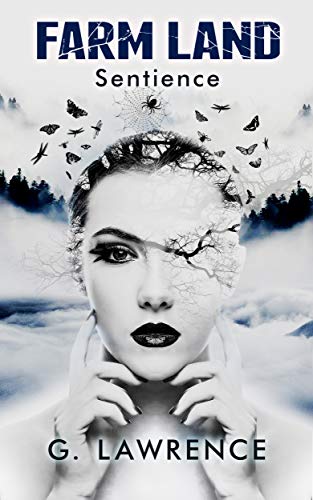
Farm Land: Sentience by G Lawrence
Dystopian - SciFi - Horror


The Bledbrooke Works by John F Leonard
Horror


The Morning Star by C W Hawes
Post Apocalyptic 


Jonah by Carl Rackman 
Military - Paranormal - Thriller


October Rain by Dylan Morgan (novella)
SciFi - Post Apocalyptic - Dystopian


Future Perfect by Katrina Mountfort
Sci-Fi - Dystopian - Post apocalyptic


By The Feet Of Men by Grant Price
Dystopian - Post Apocalyptic - Climate Change


The Turning of the World by John Privilege
Post Apocalyptic 


X by Jack Croxall (short story)
Post Apocalyptic


Next time: Historical Fiction


Wednesday, 2 October 2019

TRIBE OF DAUGHTERS by Kate L Mary @kmary0622

4.5 out of 5 stars

On Amazon UK
On Amazon.com
On Goodreads
On BookBub


How I discovered this book: in my Kindle library; I've read lots of this author's books before, and downloaded this some time ago.

In a Nutshell: In a post-apocalyptic world, a village exists up a mountain which is ruled by women

The novel is set 70 years after a plague wiped out most of the population, and takes place in a strange village up a mountainside - a matriarchal society, in which the men do as they're told, and women choose husbands to make more daughters from the 'yieldlings' within the village (men who have grown up there), or 'foundlings' - men from outside, who are kidnapped.

The story starts when Jameson is abducted along with 4 other members of a working party.  He is chosen as a husband by Wilderness, the daughter of the village Elder.  The story is told in the alternate POV chapters of Jameson and Wilderness.

When I first started reading this, I thought, oh, this is fun - a society in which women make men feel as unimportant as the men of the past used to make women feel; some of the parallels amused me, as I saw the foundlings' outrage about aspects of their new lives that the women of history put up with, without question, for hundreds of years.  But as the story when on, I saw how sinister it was, and how it was no better than any patriarchal society of the past.  Really, it's a story about control, and its evils.  Jameson decides to stick with it, as his life back in the post-apocalyptic city wasn't so great, either, and he tries to teach Wilderness that this way of living is far from utopian.

I liked the story a lot; it's original, and Kate Mary's books are always so readable.  At first I was a bit unsure about aspects of the world left behind, which is only talked about in vague retrospect, though we do see more evidence later, and of course all post-apocalyptic writers see the effects of disaster differently; no one knows how it actually would be.  I was also unsure about the way the villagers talked - in just 70 years they had gone back to talking like something out of a Jane Austen novel, at times, saying things like 'Good morrow' to each other, but later on I understood that this was all part of the initial control by the woman who started the community; when Wilderness meets men from the 'outside', she thinks how strange it is that they 'run their words together'.

Yes, it's good.  Recommended!